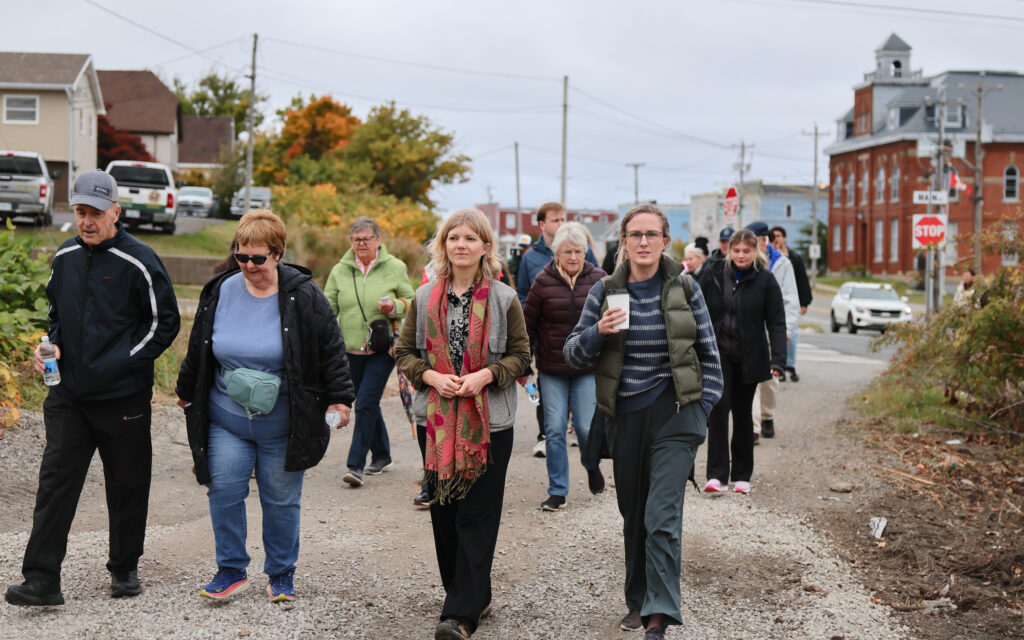
On October 17, 2025, Parachute, in partnership with the Ecology Action Centre (EAC), delivered the fourth Vision Zero Walkshop in Glace Bay, Cape Breton, Nova Scotia.
This community-based, experiential learning event brought together municipal leaders, youth, planners, transportation professionals and community organizations to explore how active transportation (AT), equity, community and road safety intersect in a real-world setting.
The walkshop followed a carefully planned seven-stop route through Glace Bay, beginning and ending at the Glace Bay Townhouse. More than 40 invited participants attended, including local high school students, municipal staff, community advocates, and representatives from provincial and local organizations.
Partners and Planning Committee
Parachute worked closely with the Ecology Action Centre to plan and deliver the walkshop. The Ecology Action Centre convened a multidisciplinary planning committee that included representatives from:
- Cape Breton Regional Municipality
- Cape Breton Regional Police
- Cycling Nova Scotia
- Glace Bay Townhouse
- Nova Scotia Health
- Nova Scotia Department of Communities, Culture, Tourism and Heritage
- Velo Cape Breton
Together, the committee developed the walkshop route, identified priority community locations, and recruited and confirmed presenters for each stop, ensuring a diversity of perspectives and lived experience.
Objectives
The Glace Bay walkshop aimed to:
- Demonstrate how Vision Zero principles can be applied in smaller and rural communities
- Highlight the role of active and multi-modal transportation in supporting youth, equity, and community well-being
- Elevate youth voices and lived experience in transportation planning
- Build shared understanding among municipal staff, community organizations and residents
- Foster dialogue about opportunities and barriers to safe, accessible mobility
Walkshop format and route
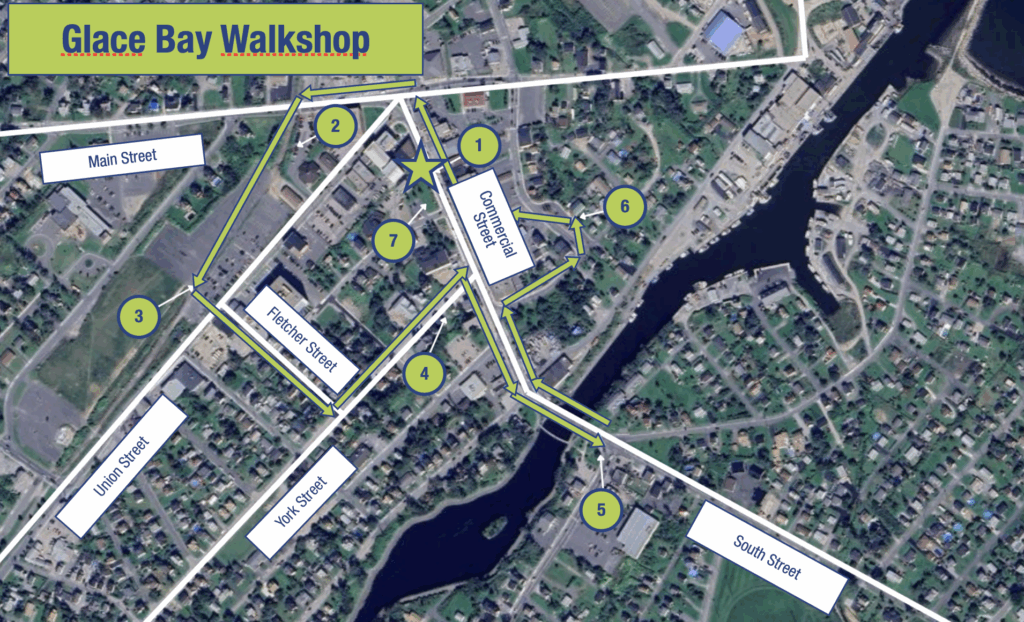
The walkshop consisted of seven stops along a connected route through downtown Glace Bay. At each stop, a local speaker shared context, challenges and opportunities related to active transportation, safety and community access.
Stop 1: Glace Bay Townhouse – welcome and opening remarks

The walkshop began at the Glace Bay Townhouse with a welcome from Mayor Cecil Clarke. Opening remarks were also provided by Stephanie Johnstone-Laurette from the Ecology Action Center and Valerie Smith from Parachute. Speakers emphasized the importance of safe mobility, community-led solutions and youth engagement in shaping safer streets.
No. 2: Coal Town Trail
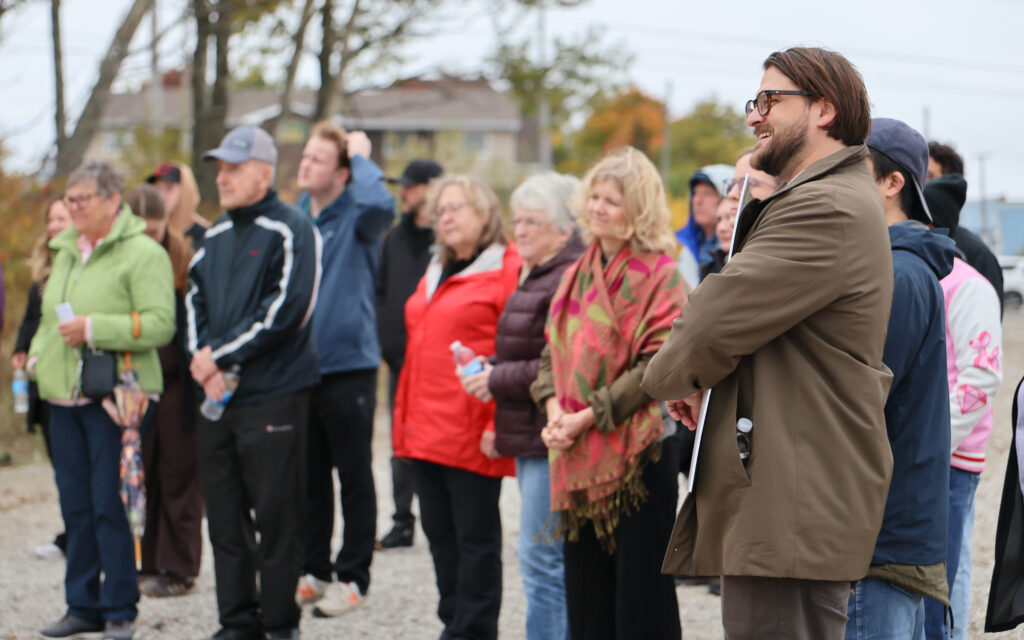
Speakers: Allister MacLean, Sharon Collins and Andree Crepeau, members of the Coal Town Trail Board
At the Coal Town Trail, participants learned about the history of the trail, its significance to the community and its connections to the Blue Route Nova Scotia. Discussion focused on the benefits of inter- and intra-community connections through multi-modal transportation and how trails can function as both recreational and essential transportation infrastructure.
No. 3a: Youth-Led Active Transportation Initiative – Glace Bay High
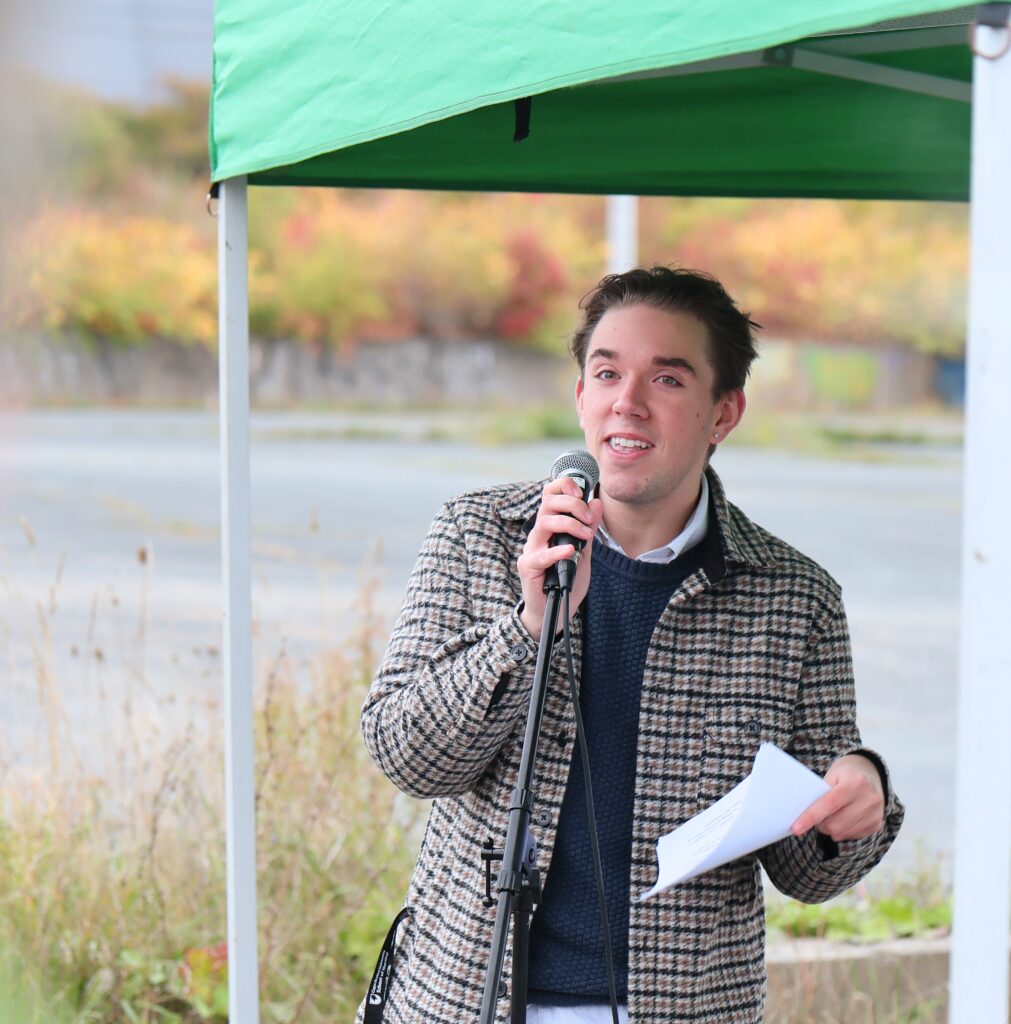
Speaker: Daniel MacGillivary, student
Participants then heard about a youth-led active transportation initiative from the nearby Glace Bay High School. MacGillivary outlined the planning and development of a multi-use path and pedestrian bridge designed to safely link the school with nearby amenities. This stop highlighted the power of youth leadership and advocacy in driving tangible infrastructure improvements.
No. 3b: Future Family and Youth Centre location
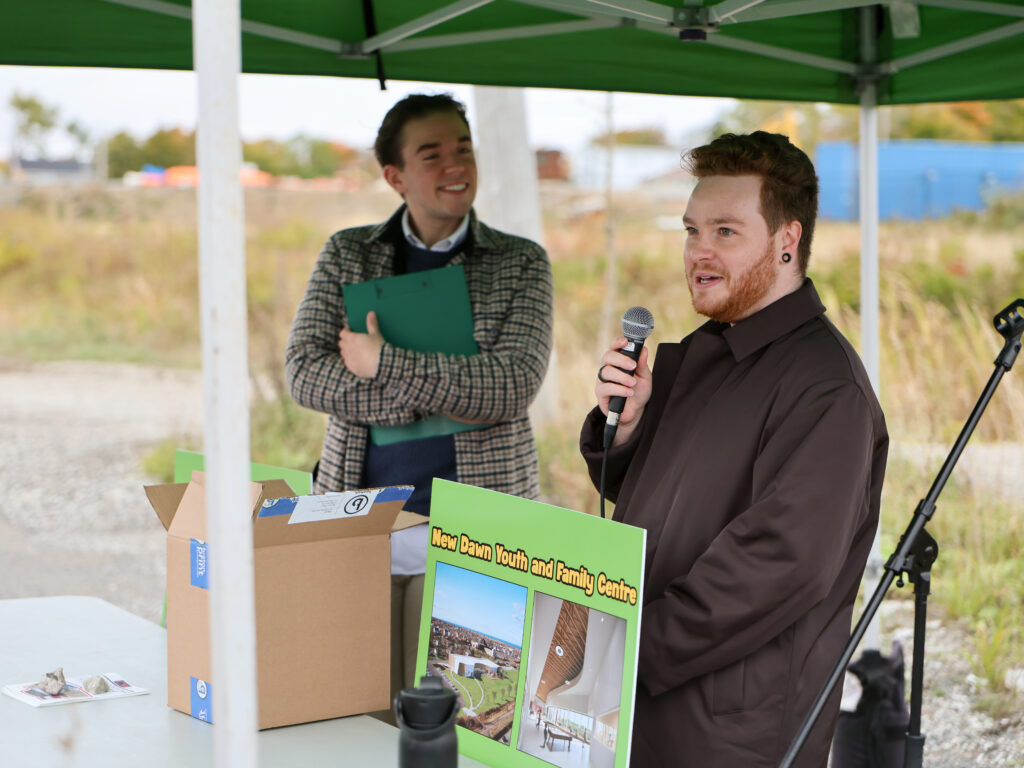
Speaker: Ryan Toomey, New Dawn Enterprises
The New Dawn Family and Youth Centre was set to open soon after the walkshop took place. This major community project will provide 25,000 square feet of much needed family resources including childcare, gym, skatepark, shared meals and integrated youth services for mental health, all in a sustainable, modern facility expected to open in 2026. Tooomey explained the process to design this space to meet the needs of local families, including being located near bus routes and AT trails for easy accessibility.
No. 4: Undercurrent Youth Centre

Speaker: Chris Kaiser, Undercurrent Youth Co-ordinator
At the Undercurrent Youth Centre, participants met with a Chris Kaiser to learn about the critical role the centre plays for Glace Bay youth and the broader community. Discussion connected access to safe, affordable transportation with youth participation, social inclusion and community resilience.
No. 5: Renwick Brook Bridge
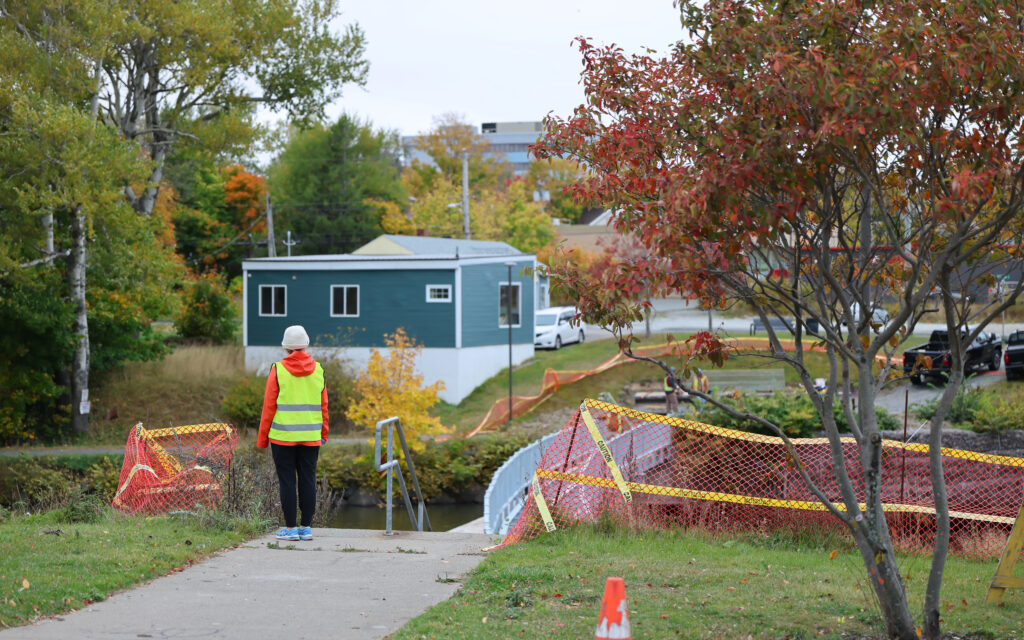
Speakers: Paula Jacobs and Justin Butler, CBRM Recreation Co-ordinators
Jacobs and Butler led participants to the new bridge infrastructure at Renwick Brook. They provided insight into accessibility features, design considerations and active transportation opportunities, illustrating how infrastructure investments can improve safety and connectivity for all users.
Stop 6: Glace Bay Food Bank Garden
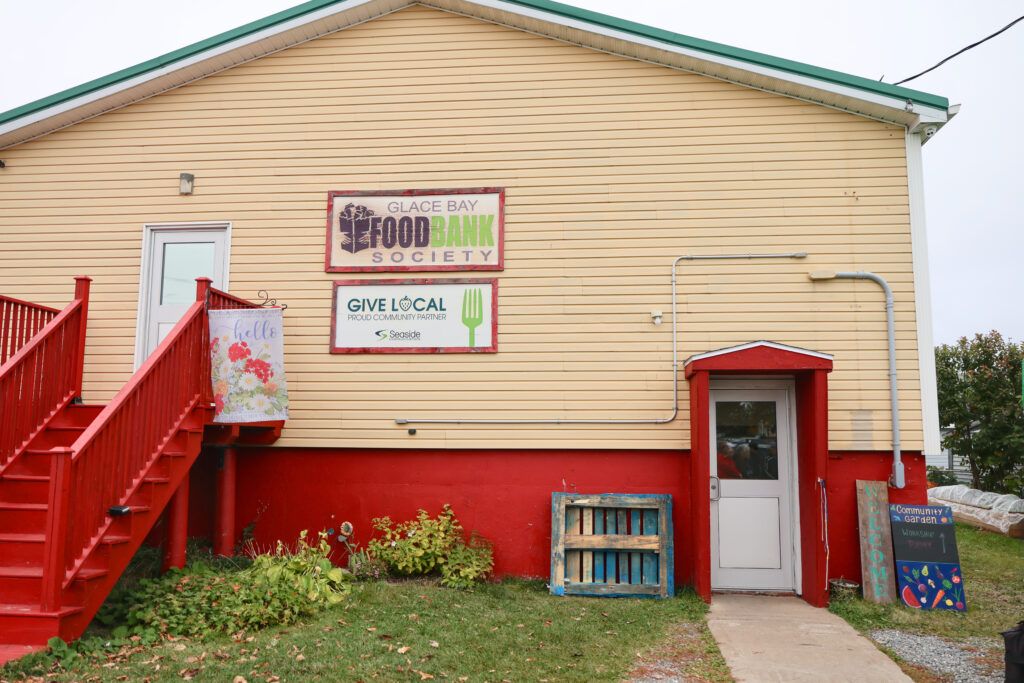
Speaker: Wendy Gouthro, Garden Co-ordinator
At the Glace Bay Food Bank Garden, participants learned about programs supporting community members facing food insecurity. This stop reinforced the importance of transportation access in enabling people to reach essential services, particularly for those experiencing economic and social barriers.
Stop 7: Commercial Street – Active Transportation in a commercial context
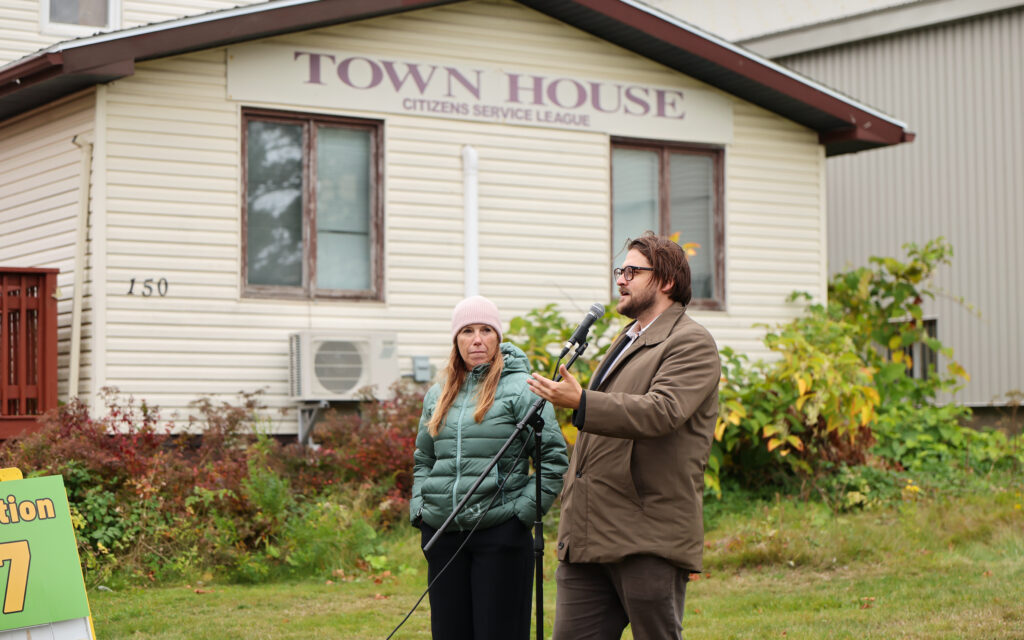
Speaker Will Roy, Community Development Co-ordinator, Cape Breton Regional Municipality Planning (pictured with Parachute’s Valerie Smith.)
Roy provided an overview of active transportation features along a key commercial street in connection to the municipal Downtown Glace Bay Revitalization plan. Discussion focused on balancing economic activity, pedestrian safety and accessibility in a mixed-use environment.
Debrief and youth-led reflection
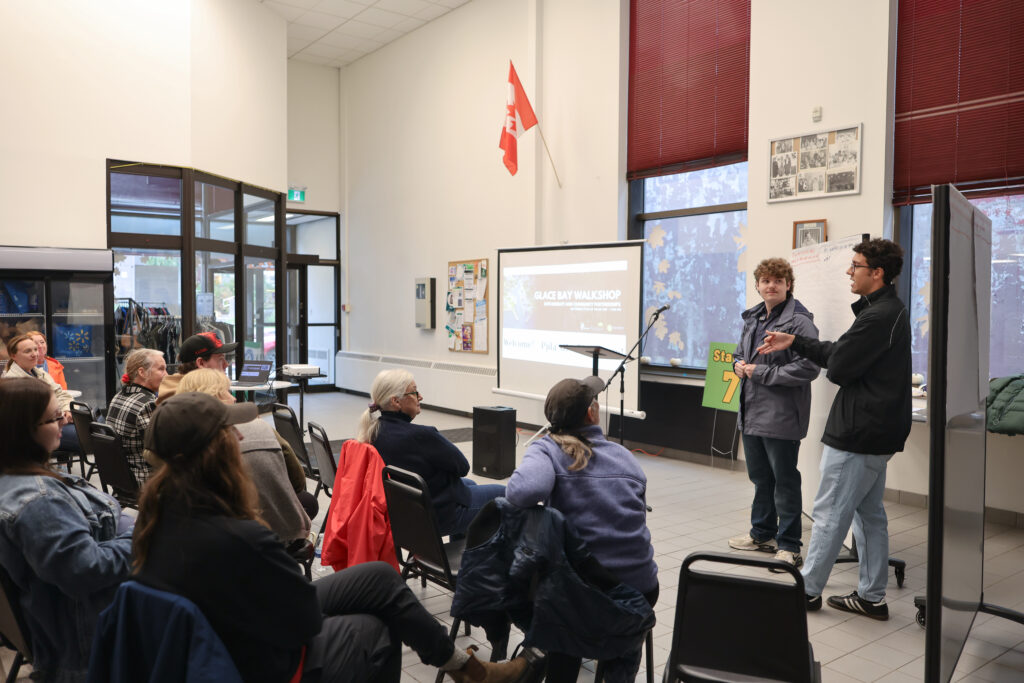
The walkshop concluded back at the Glace Bay Townhouse with a facilitated debrief. Youth participants played a central role in leading the discussion, inviting attendees to share observations, reflections, and ideas for change. This closing session reinforced the importance of youth voice and peer-to-peer learning.
Outcomes, key takeaways, lessons learned and next steps
The Glace Bay walkshop demonstrated that Vision Zero walkshops are adaptable beyond large urban centres and can be highly effective in smaller communities. We had:
- Strong community engagement. More than 40 participants attended, representing a wide range of sectors and lived experiences.
- Youth leadership. Youth-led presentations and facilitation were a defining feature of the walkshop, strengthening dialogue and impact.
- Practical learning. Seeing infrastructure, programs and challenges firsthand helped ground Active Transport and Safe Mobility principles in local reality.
Key lessons included:
- The value of multidisciplinary planning committees
- The importance of recruiting local speakers with lived experience
- The impact of centring youth voices
- The effectiveness of walking the route together to spark meaningful discussion
The success of the Glace Bay walkshop reinforced the value of walkshops as a tool for community engagement, learning and collaboration. Insights from this event will inform future Parachute and partner initiatives, supporting the expansion of Vision Zero walkshops across Canada in communities of varying sizes and contexts.
Survey results
Nearly all participants rated the experience as highly engaging and a valuable use of their time, and every respondent said they would recommend a Walkshop to others. Participants consistently highlighted the interactive format, community walk and youth leadership as standout elements.
Many shared that the Walkshop deepened their understanding of how safe walking routes, accessible infrastructure and street design directly influence community health, local businesses and social connection. Several participants noted learning new information about pedestrian safety, crosswalk design and the relationship between mobility and community vitality.
Participants identified both strengths and challenges in Glace Bay, including:
- Strong community assets such as the Food Bank garden, Youth Centre and revitalization efforts
- The need for safer sidewalks, crosswalks and walking routes
- Ongoing challenges related to car dependency, funding and the pace of infrastructure change
- The importance of public engagement and education to support safer mobility
- Youth perspectives were frequently cited as inspiring, hopeful, and essential to shaping the future of Glace Bay