Now that you know who makes the decisions, here are your next steps: what are the issues and what you can do about them.
This section walks through three of the most common road safety issues on Canadian roads:
- Speeding
- Unsafe road infrastructure
- Impaired driving
For each one, you’ll see why it’s dangerous and the evidence-based solutions you can push for in your own community. Prepared with this knowledge, you’ll know what evidence to bring to decision-makers to build a compelling case for change.
What a road safety issue looks like
A road safety issue is a place, behaviour or a gap in your community’s roads that puts people’s lives at risk. Some issues are easy to spot, such as aggressive driving, and some you likely see on the road everyday but don’t think too much about, such as faded crosswalk markings or sidewalks that suddenly end.
Rather than relying solely on individuals to change their behaviour, Parachute supports solutions that improve the transportation system as a whole. This approach aligns with the principles of the Safe System Approach and Vision Zero.
The solutions to the issues described below come straight from the Alliance Accountability Toolkit, a resource built by the Global Alliance of NGOs for Road Safety.
Proposing and advocating for specific changes rooted in research and evidence makes it easier for decision-makers to plan, implement, budget and check up on later.
Issue 1: Speeding
Speeding is one of the most common dangers on Canadian roads and one of the most normalized, as well. Nearly 70 per cent of Canadians admit to speeding in a residential area at least once in the past year, half say they regularly speed on highways, and one in five say they frequently drive well above the posted limit.
Why does that matter?
The faster a vehicle travels, the less time the driver has to react, and the harder the impact when something goes wrong. That makes crashes both more likely and more deadly and the people with the least protection – those walking, biking, and rolling – pay the highest price.
The evidence
Speeding contributes to one in four fatal crashes.
Speed very often also decides who survives a crash: a pedestrian struck by a car travelling at 50 km/h is almost six times more likely to be killed than one struck at 30 km/h. That 30 km/h mark is the threshold where drivers can still stop in time and pedestrians can judge a crossing safely. Above it, the risk of death or serious injury climbs fast, whether you’re inside a vehicle or outside one.
Solution: Lower speed limits
Lower speed limits reduce the maximum legal speed on a road so that traffic moves at speeds people can survive. Safe System research points to survivable speeds for each type of road:
- 30 km/h zones where people walk, bike, live and play such as residential streets, school zones, transit hubs, and busy city centres
- 50 km/h zones where side-impact crashes are possible, such as at intersections
- 70 km/h zones where head-on crashes are possible.
The goal of these policies is to ensure that when crashes do happen, which they will, the people involved can walk away from them. A sign on its own only does so much. Limits work best when backed by speed enforcement, traffic calming and pedestrian facilities, described below.
Issue 2: Unsafe road infrastructure
Speed control is important but sometimes the danger comes from the road itself. Oftentimes, these are the hazards you pass by every day without giving them too much thought. There are so many examples:
- Non-existent sidewalks that force people to walk in traffic
- Crosswalks that are missing or too far apart, encouraging people to jaywalk
- Busy urban roads without protected bike lanes, where cyclists must ride alongside faster-moving traffic and are repeatedly overtaken by cars
- Blind intersections that hide people on foot from turning drivers
- Wide open streets that invite drivers to speed no matter what the sign says
Why do these hazards exist? Canadian roads were originally designed decades ago with one goal in mind: moving cars as quickly as possible. When the safe option doesn’t exist, people get pushed into unsafe ones. That’s not the fault of the people using our roads: it’s a design failure, one that often burdens the people with the fewest options. When the goal changes to making the roads safer for everyone to get where they are going, decisions change, too.
The evidence
In 2023, pedestrians and cyclists made up 17 per cent of everyone killed on Canadian roads, even though they account for a small share of trips. These deaths can be prevented by changes in road infrastructure design: When researchers test these design changes one by one, isolating a single intervention and measuring what happens on the road afterward, the safer designs reliably reduce injuries and deaths.
Solution: Pedestrian facilities
Pedestrian facilities are the basic infrastructure that makes walking safe: sidewalks and footpaths physically separated from traffic and crossings that give people walking legal priority and real protection. They belong anywhere people need to walk along or cross a road.
Good sidewalks are wide, smooth, free of obstruction and designed with accessible transitions at crossings such as curb ramps so they can be safely and comfortably used by everyone, including people who use wheelchairs, walkers or canes.
Good crossings use signals indicating priority, raised platforms and rumble strips or speed humps ahead of the crossing, so drivers notice pedestrians and yield. The research shows that separating people from traffic is one of the most reliable ways to prevent deaths and injuries.
Solution: Traffic calming
Traffic calming refers to changes to a road that force or encourage drivers to slow down to the appropriate speeds. Examples of physical traffic calming, which change the design of a road to force drivers to reduce their speed, include:
- curb extensions
- narrowed lanes
- raised crossings
- rumble strips
- speed humps
Electronic traffic calming, a newer approach, uses digital technology to slow down drivers. Automated speed enforcement (ASE), sometimes called safe speed cameras or photo radar, is a type of electronic traffic calming. These cameras automatically detect vehicles travelling over the posted limit, photograph their licence plates and mail a ticket to the registered owner, discouraging speeding.
These measures are typically placed on residential streets, around schools and anywhere drivers frequently drive faster than the posted limit. Research shows that traffic calming reliably reduces vehicle speeds and, with them, the number and severity of crashes.
Automated speed enforcement in Toronto school zones
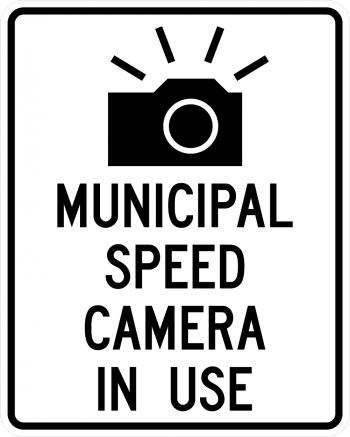
Ontario’s provincial government banned Automated Speed Enforcement (ASE) in November 2025. Before the ban, ASE was being adopted increasingly across the City of Toronto, particularly in school zones.Researchers at SickKids and Toronto Metropolitan University set out to measure how well these cameras slowed drivers down by comparing speeds before and after cameras were installed at 250 school zones. The results were striking: the number of speeding vehicles dropped by 45 per cent, and typical driving speeds fell by almost 11 km/h. The worst offenders nearly disappeared too, with an 88-per-cent drop in vehicles travelling more than 20 km/h over the limit. Despite this clear evidence, the cameras were switched off. However, the evidence didn’t disappear and neither did the people who believe in it. It proves that safer streets are within reach and they last when there are people, like you, ready to speak up for them.

Issue 3: Impaired driving
Safe speeds and safe roads both help, but they can only do so much when the person behind the wheel isn’t in a state to drive. Impaired driving means getting behind the wheel after drinking, using cannabis or taking other drugs. The issue is more common than you’d think:
- A driver who’s had a few drinks and figures they’re fine for the short trip home
- A group leaving a party because the last bus already came and went
- Someone who has used cannabis and thinks it doesn’t affect their driving abilities
These are the everyday moments where impaired driving happens. Impairment slows your reaction time, clouds your judgment and makes you overconfident. That’s dangerous at any speed and it puts everyone on the road at risk.
The evidence
Impaired driving is one of the most prominent factors behind serious crashes on Canadian roads. It hits young people hardest: among drivers aged 16 to 24 injured in a crash, almost half test positive for alcohol, cannabis, or other drugs. And the danger is often underestimated. Some Canadian cannabis users think it’s fine to drive high, even though cannabis makes it harder to react in time, hold your lane and keep a safe following distance.
Solution: Alternative transportation
One of the best ways to prevent impaired driving is to make sure nobody feels they must drive in the first place. That means real alternatives that run when people are out: late-night buses and trains, and affordable rideshare. When cities make these options available in an affordable, convenient and safe manner to the average person, fewer impaired drivers end up on the road.
Pushing for these types of services in your community gives everyone a way home that doesn’t put a life at risk. Encouraging peers to set a plan to get home safety with a designated driver before consuming alcohol or drugs is also crucial.
Interventions work better together
Lower speed limits, better crossings, traffic calming and safe rides home each address a different part of the problem. When combined, they make our roads much safer.
That’s one core idea within the Safe System Approach: no single solution is perfect, so we build in layers of protection. If one safety measure doesn’t prevent a crash, another can reduce the chances of someone being killed or seriously injured. A lower speed limit brings speeds down, narrowed lanes make drivers slow to feel safe, a raised crosswalk gets them to stop for pedestrians and a protected bike lane keeps cyclists out of traffic altogether.
Together, these measures create a safer road for everyone. So, when you advocate, think about putting together multiple solutions, not just one.
Reminder: This list is a launchpad, not a limit
The example interventions above are evidence-based and worth fighting for, but it’s far from a complete list. Treat it as a starting point: at the end of the day, this is your advocacy journey.
Maybe the solution you are wanting to advocate for is on this list or maybe it’s another evidence-based road safety measure. There’s so much more out there and you can explore it for yourself.