
This toolkit provides parents of children ages 10 to 16 with tips and resources so you can help your children understand responsible use of over-the-counter (OTC) medications.

Over-the-counter medications are health products that you can buy without a prescription from a doctor. Examples are:
- some pain or headache medications, such as acetaminophen, ibuprofen and naproxen sodium
- allergy medications
- cold and flu medications, such as cough syrup.
As your child grows into their pre-teen and teen years, they learn more and more about their own health. This includes when and how they might use OTC medications. Learn more below about how you can support your child to use these products safely.
Your kids are watching and listening to you, even if you think they aren’t
- Research shows that, as a parent, you have a big influence on what your child knows about and how they use OTC medications.
- Pre-teens and teens say they go to their parents for information about OTC medication.
- Talk with your child about safe medication use. Teach them:
- To read and follow the directions on the medication label
- The possible dangers of using medications in ways they are not meant to be used or taking too much of a medication
- To talk to you, their doctor or a pharmacist if they have questions about medications
- Show your child safe and responsible medication use through how you use and speak about medications.
- Involve all parents/caregivers that take care of your child in talking about and practising safe OTC medication habits to create a consistent and supportive approach.
Use the Talking about over-the-counter medication safety
resource for tips on talking with your child about safe medication use.
Learn, and help your child learn, how to understand medication labels
Every OTC medication you buy must have a medication label on the package. The label has important information about the medication. Understanding how to read these labels will help both you and your child to use medications safely.
Teach your child:
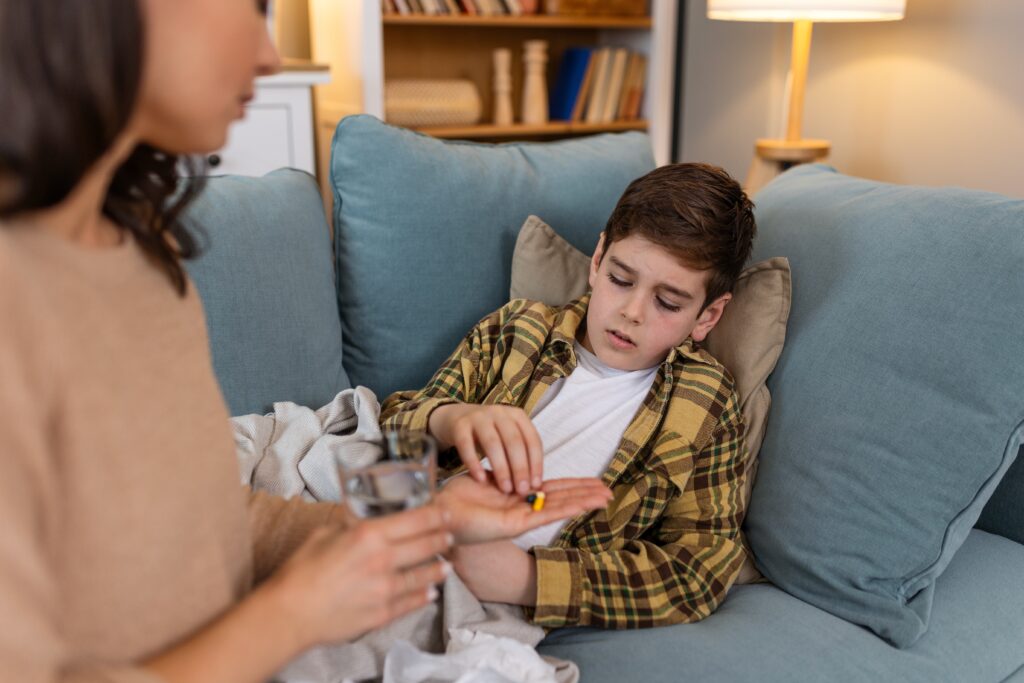
- OTC medications can have risks just like prescription medications do, even though they are easier to access.
- What information is on a medication label, where to find it and what it means.
- It’s important to read the label carefully before taking any medication.
- To follow dosage recommendations, including:
- how old you should be to take the medication
- how much medication to take at once
- how often to take the medication
- how much of the medication can be taken safely in one day (24 hours)
- You might need to know your weight to figure out your safe dose.
- OTC medications do not work better by taking more than the recommended dose. They work best when taken in the correct dose and at the right times.
- Taking more than one medication with the same active ingredient at the same time can be dangerous. For example, do not use a headache medication and a cough syrup together if they both have acetaminophen in them.
- OTC medications can change how your prescription medications work. If they take any prescribed medications, it’s important to make sure that taking a new OTC medication will not cause problems.
Use the How to read an over-the-counter medication label resource to learn about the information on medication labels and why it is important.
As your child grows, so should the way you supervise their medication use

When your child is young (birth to around age 10 or 11):
- They take medication when you, another caregiver or a healthcare professional gives it to them.
- Keep them from getting into medication by watching them closely and storing medication locked up high, out of sight and out of reach (for example, on a high shelf in a locked cabinet).
When your child reaches their pre-teen years (around age 11 or 12):
- They are typically ready to have more responsibility for their own medication use, but you know your child best. Decide when your child is ready to gain more independence when taking OTC medications.
- They may become more independent, but it is still important for you to know where they are storing and accessing OTC medications, how often they are taking them and the reasons for using the medication.
- Make a plan together for how and when they will use medications. For example, you might agree that they will check with you before taking any OTC medications.
- Teach them where it is safe to get OTC medications from and where it isn’t. They should not give their medications to others.
- Teach them to return expired OTC medications to the pharmacy.
To help everyone in your home use OTC medications safely, avoid keeping large bottles of OTC medications in your home. Store only smaller amounts as needed.
Use the Talking about over-the-counter medication safety resource for tips on planning your child’s medication use as they grow.
Know when and where to seek expert help
- It may be tempting to search online for medication information, but speaking directly to a healthcare professional provides more reliable advice that is right for your child.
- Talk to your doctor or pharmacist if you have any questions about OTC medications, such as proper dosages, side effects or concerns about your child’s medication use.
- If you are concerned about something your child has taken, act quickly and seek help.
If they lose consciousness or have difficulty breathing, call 9-1-1.
If they are experiencing a mental health crisis and need support, call or text 9-8-8.
If it is not an emergency, call 1-844-POISON-X (1-844-764-7669) to reach your local poison centre.
If you are located in Nunavut, contact your local health centre.
If you are located in Québec, call 1-800-463-5060.
Keep the number of your poison centre nearby or in your phone.
Program the number into your phone’s contact list or keep it in a visible location, such as on your fridge. Encourage other caregivers of your child to add the phone number into their phone’s contacts, too. If your child has a phone, ensure that the poison centre number is entered into their phone’s contacts.
Resources
Parachute resources
-
How to read an over-the-counter medication label
Learn about the information on medication labels and why it is important.
336.37 KB PDF/UA
-
Out of sight and locked up tight: Tips for Parents
Download our tip sheet on poison prevention for parents.
85.74 KB PDF/UA
-
Talking about over-the-counter medication safety
Pre-teens and teens can benefit from being taught to take responsibility for their own over-the-counter (OTC) medication use. This guide will help you equip your child with information and skills to use medications safely, now and in the future.
472.78 KB PDF/UA