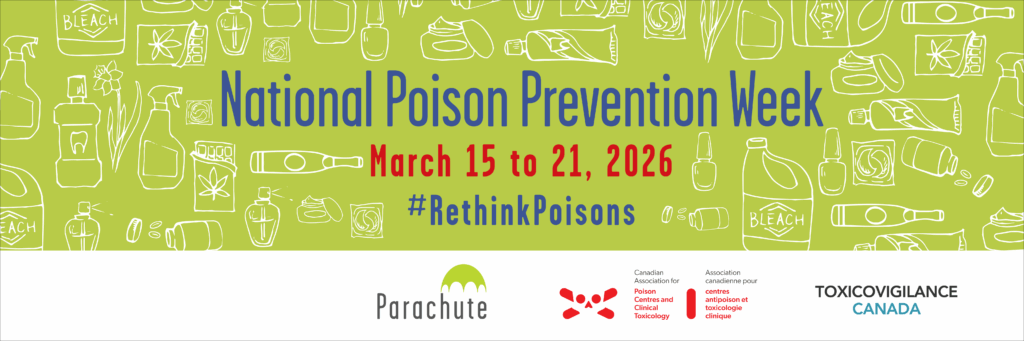
National Poison Prevention Week is an annual campaign to raise public awareness of poisoning injuries in Canada, encouraging community involvement as part of the solution.
Each year, more than 5,000 people in Canada lose their lives due to poisoning and annual unintentional poisoning deaths have surpassed transport-related deaths in Canada.
For 2026, the campaign will encourage people in Canada to #RethinkPoisons and use over-the-counter medications and natural health products safely. The goal of the campaign will be to empower people in Canada to talk to their doctor or pharmacist about medications and natural health products, read labels carefully and use products safely.
Medications can help when used safely
It is easy to find over-the-counter medications in stores, online and at home. They are safe for most people if you use them in the right ways but there are dangers if you don’t use them safely.
Medications are the leading cause of poisoning in Canada
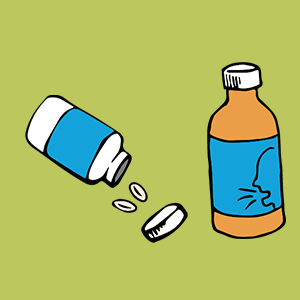
This includes prescription medications, over-the-counter medications and natural health products. Each year, pain medications are the No. 1 substance people call poison centres about. Poison centres in Canada receive about 100 calls a day about pain medications.
Over-the-counter medication is medication you can buy without a prescription from a doctor. One example is medication that helps with pain, such as acetaminophen. Another example is cough syrup.
Natural health products are often made from plants but can also be made from minerals or other natural things. Vitamins and traditional medicines are examples. Natural health products can come in many forms such as tablets, capsules, creams, ointments and drops.
Take action to prevent poisoning
Knowing how to use and store prescription medications, over-the-counter medications and natural health products safely can prevent poison-related injuries and harm for you and your family.
Take and give medication, including over-the-counter and natural health products, safely
- Always read the label and instructions for use before giving or taking medication. The label tells you how, when and who should take the medication. It also has important warnings and precautions.
- Read and follow the dosage. Medications do not work better by taking more than the recommended dose. They work best when you take the correct dose.
- Pay attention to all dosage instructions. Read how much medication you can take at once, how often to take it, and how much you can take in 24 hours.
- Talk to your doctor or pharmacist if you have any questions about medications or natural health products, such as proper dosages or side effects.
- Mixing medications and other substances can be dangerous. Talk to your doctor or pharmacist before you use a new medication or natural health product. This includes vitamins and supplements.
- Mixing alcohol and/or cannabis with medications can have dangerous effects. Ask your pharmacist about any effects alcohol and/or cannabis may have on the medications or natural health products you take.
- Many over-the-counter products have acetaminophen along with other ingredients. Check labels and do not use more than one product with acetaminophen in it at the same time, unless your doctor or pharmacist has told you to do so.
When picking up or buying medication
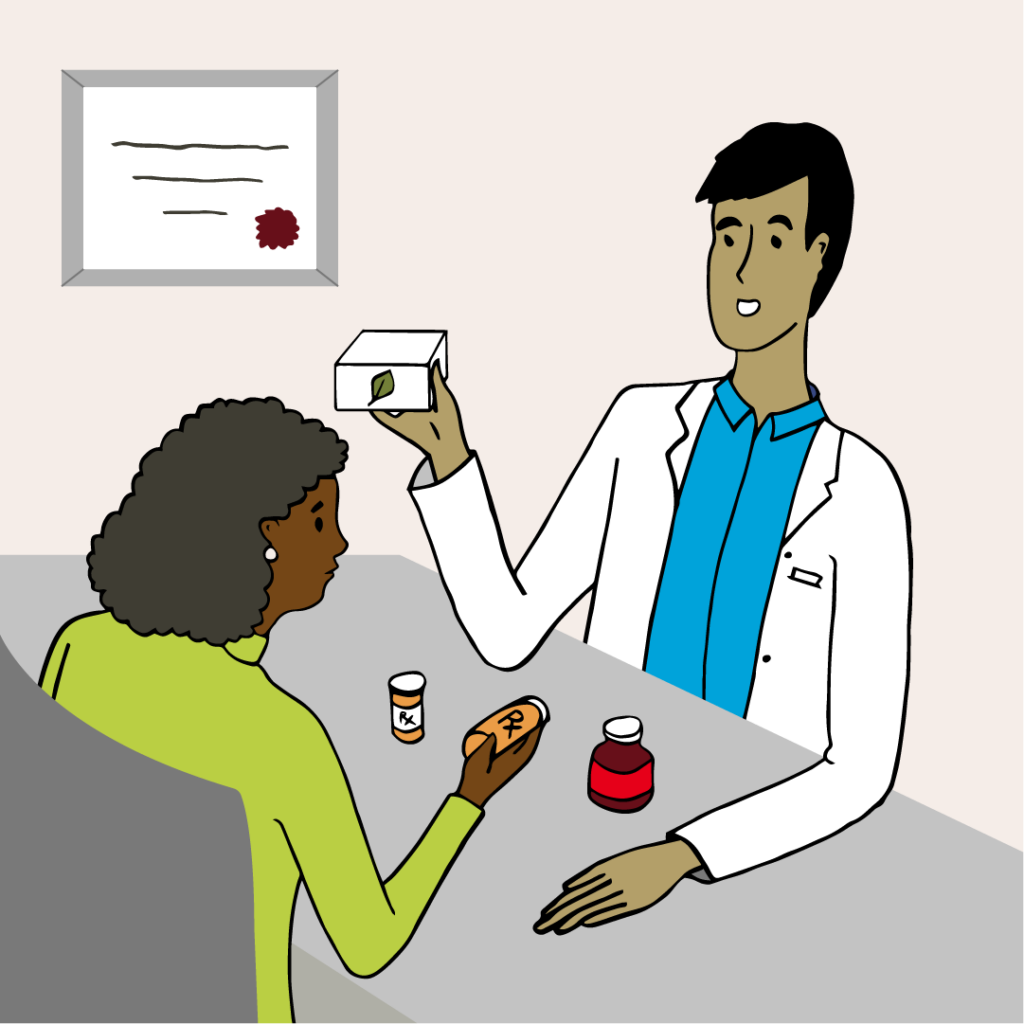
- Talk to your pharmacist. They can help you use prescriptions, over-the-counter medications and natural health products safely.
- Inform your pharmacist about any medication conditions you have or have had as well as all medications (including vitamins and supplements) you are taking and exactly how you take them.
- Tell your pharmacist about any changes to your medications, as well as anything that could impact your use of the medication, such as issues distinguishing between medications or taking the correct dosage.
- Pay attention to packaging. Choose products with child-resistant packaging and buy smaller packages instead of bigger ones. Having less medication at home can help prevent misuse and abuse.
Store medications safely away after use
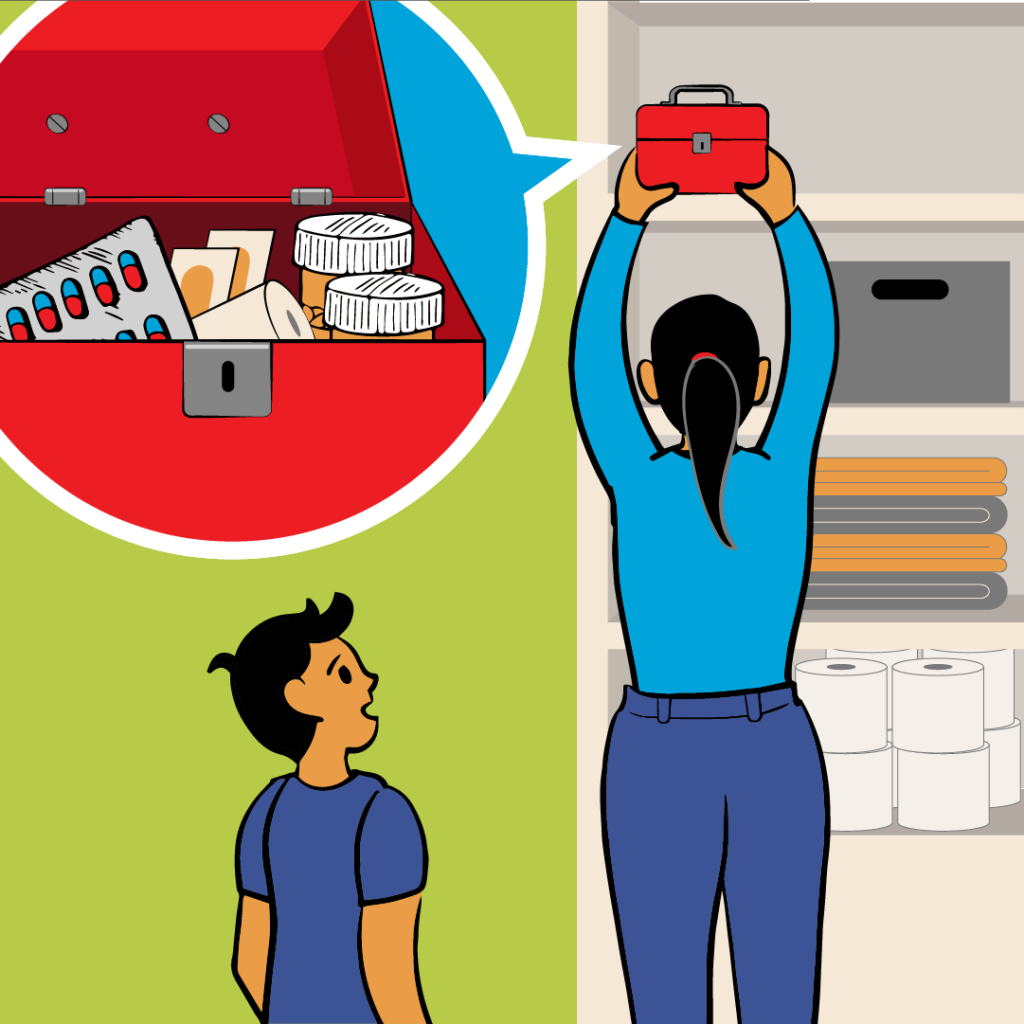
- Store over-the-counter medications and products safely away, just like prescriptions, after every use.
- Storing medications and products safely means locking them away, up high and out of reach. Medication lock bags or boxes can be used to securely store medications.
- Return expired and unused prescription and over-the-counter medications and natural health products to your pharmacy or through your local unwanted medications take-back program.
Know what to do in case of a poisoning
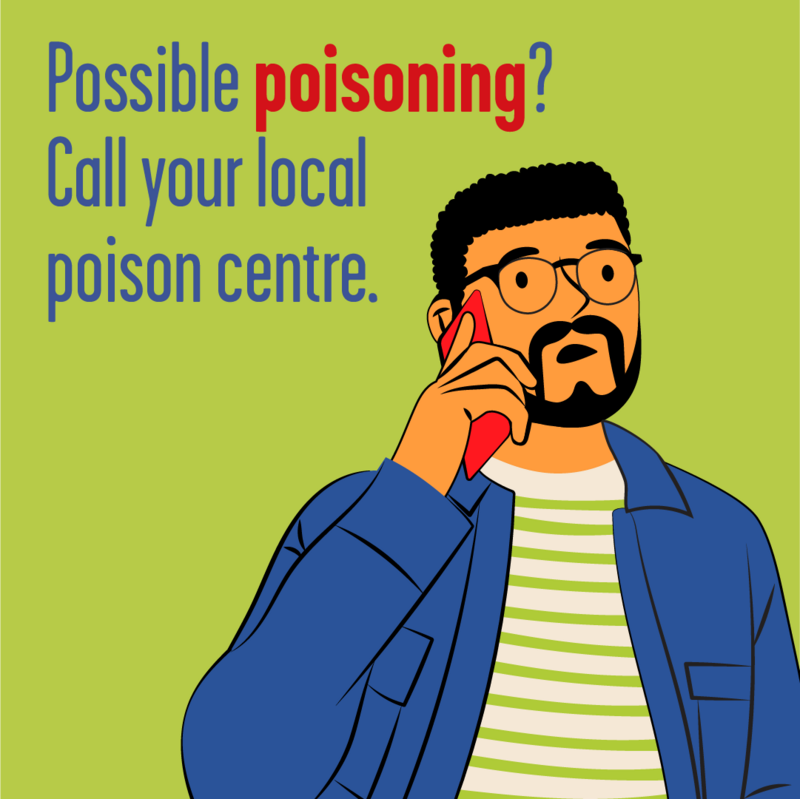
Have an action plan in place to help you and your family respond quickly in the event of a poisoning (for example, if someone has taken too much of a prescription medication, over-the-counter medication or natural health product). If you suspect a poisoning, call your local poison centre.
Poison centres are a free phone service you can call. They are available 24/7 and have healthcare providers with special training in the effects of poison. Poison centres give advice to people of all ages who may have been exposed to a poison.
Possible poisoning? Call your local poison centre.
Canada has a toll-free 24/7 number for poison centres. If you suspect a poisoning, call 1-844-POISON-X (1-844-764-7669).
If you are located in Nunavut, contact your local health centre. If you are located in Québec, call 1-800-463-5060.
Keep the number of your poison centre nearby or in your phone. Program the number into your phone’s contact list or keep it in a visible location, such as on your fridge.
If the person loses consciousness, has difficulty breathing or is having a seizure, call 911.
Support is available
There are many resources available if you or someone you know is in crisis and in need of support. Call your local poison centre if you suspect self-harm by poisoning.
If you or someone you know:
- Requires urgent medical care, call 9-1-1.
- Is thinking about suicide, call or text 9-8-8. In Québec, call 1-866-APPELLE. Support is available 24 hours a day, seven days a week.
- Is looking for substance use support, find Canada-wide and regional support services.
Report medication concerns: Help create a safer Canada
Everyone can help by reporting unsafe products and issues with medications.
- Report your experience with or concerns about a product to Health Canada to help identify risks to people’s health and safety.
- Play a vital role in reducing medication incidents by reporting them. A medication incident, also known as a medication error, is a mistake with medication (e.g., receiving the wrong medication, dose, or route of administration).
- Health professionals are encouraged to report adverse reactions and concerns about products. Reporting is a critical part of the process to improve health product safety for all people in Canada.
Resources
2026 Poison Prevention Week resources
2026 video shorts
Additional resources
These downloadable resources can be used to educate and inform on the topic of safe storage of cannabis and other poisons.
-
Poison storage checklist for your house
Keep your children safe by keeping these household poisons locked up, out of sight and out of reach.
1.17 MB PDF/UA
-
Poison storage checklist for your apartment
-
Parent and Caregiver Tips to Prevent Child Poisoning
Tips for parents on how to prevent child poisoning from substances around the house.
1.10 MB PDF/UA
Videos: Help is a call away
These videos share stories about poison centre calls and were created in 2023 with funds from Health Canada and in partnership with the Canadian Association of Poison Centres and Clinical Toxicologists (CAPCCT) and Parachute.
Poison prevention resources from our partners across Canada
-
Medication record
This medication record allows you to capture details about medications currently being taken, when and for what reason.
-
Natural Health Products: Choosing the Right Ones for You
From the Institute for Safe Medication Practices Canada, find tips and resources for choosing the right natural health products for you.
-
How to help someone experiencing a poisoning (video)
From the Canadian Red Cross, this video details what to do if you suspect someone has been exposed to a poison.
-
How to recognize and respond to opioid poisoning
From the Canadian Red Cross, this article details how to recognize and respond to an opioid poisoning. Learn about signs of opioid poisoning and what to do in an opioid poisoning emergency. The page also provides downloadable educational posters.
-
Bud Talks: Cannabis and Older Adults
This resource for older adults outlines the risks associated with cannabis use, cannabis drug interactions as well as considerations around certain medical conditions and cannabis use.
-
Canadian Association for Poison Centres and Clinical Toxicology
Infopoison.ca is the website for the Canadian Association of Poison Centres and Clinical Toxicology. It provides the contact information for provincial poison centres and resources about poison prevention.
-
Health Canada: Is Your Child Safe?
This resource has child safety information related to common products around the home, including poison prevention.
-
BC Injury Research and Prevention Unit: Poisoning
The BCIRPU’s Poisoning webpage provides provincial statistics for British Columbia, prevention tips and resources.
-
Child Safety Link: Poison Prevention
Child Safety Link is based out of the IWK Regional Poison Centre and its goal is to help educate Maritime communities about poisoning prevention. This Poison Prevention webpage includes prevention tips and resources.
-
Ontario Poison Centre
Serving Ontario, Manitoba, and Nunavut, this website has information for families and health professionals, including common causes of poisoning in Ontario.
-
Poison and Drug Information Service (PADIS), Alberta
From Alberta Health Services, the webpage has information about PADIS services and answers to frequently asked questions. PADIS serves Alberta, Saskatchewan and the Northwest Territories.
-
“Poison Prevention…It’s in Your Hands”, Saskatchewan Prevention Institute
-
Injury Prevention Centre: Preventing poisoning injuries

The Injury Prevention Centre in Alberta provides resources for preventing poisoning, including posters on safe storage, taking medications safely and more.
-
Québec Poison Control Centre
The Québec Poison Control Centre website has information and resources on poison prevention; basic information is provided in English and French, with extensive resources for professionals in French.
-
Saskatchewan Prevention Institute: Poisoning
The SPI Poisoning webpage has provincial data on child poisonings and downloadable fact sheets, posters and activities.
-
Health Products Stewardship Association: Returning medications
Find a collection location near you where you can drop off expired and unwanted medications and used medical sharps.
Media
-
Video
Paging Dr. Paul: National Poison Prevention Week
CTV News Ottawa — March 18, 2026
-
Video
Important poison prevention tips
-
News release
Pain medications remain the leading cause of poison centre calls in Canada
-
Link
National Poison Prevention Week: Ways to prevent inadvertent poisonings
Global News Toronto — March 20, 2024
-
Link
Message from the Minister of Health for Poison Prevention Week 2024
www.canada.ca — March 18, 2024
-
Link
Poison Prevention Week March 20 – 26, 2022 Town of Ajax
www.ajax.ca — March 21, 2022
-
Link
Pandemic posing increased poison risks for children
www.rcinet.ca — March 22, 2021
-
News release
National Poison Prevention Week campaign calls on Canadian residents to #Check
For Poisons among ordinary household items -
News release
National Poison Prevention Week campaign focuses on children and cannabis
-
Link
Spike in cannabis poisoning in kids a concern for doctors: ‘It’s candy and it tastes great’
-
Link
Marijuana Can Be Poisonous For Young Kids, So Here’s How To Store It Safely
HuffPost Canada — October 12, 2018
-
Link
President Steve Podborski about dangers of cannabis
Winnipeg Sun — October 14, 2018
-
News release
As cannabis becomes a legal drug in Canada, remember it can be poisonous to children
-
Link
With cannabis legalization looming, doctors foresee uptick in emergency-room visits
Globe and Mail — October 14, 2018