
The Caregivers’ Guide to Fall Prevention provides simple and practical information to help caregivers understand, prevent and manage falls.
Falls are the No.1 cause of injury for seniors in Canada. Falls can lead to hospital stays and make it harder for seniors to live independently.
As people get older, falls are more likely to happen. A fall can cause injury, chronic pain and make everyday life harder. Even without an injury, a fall can shake a person’s confidence and cause them to be less active.
Caregivers’ Guide to Fall Prevention
What’s inside the guide
- Understanding fall risks: Learn about what can affect a person’s risk of falling, such as age, mobility issues, health conditions, medications and home hazards.
- Fall prevention strategies: Practical tips to address vision and hearing health, proper footwear, home modifications, mental health, physical activity and hydration.
- What to do if a fall happens: Step-by-step instructions on how to safely help someone after a fall, when to seek medical care and how to document falls for future prevention.
- Tools and resources: Includes a Personal Fall Risk Assessment, daily, monthly and annual reminders, and a Fall Action Plan for the care recipient.
- Conversation guide: Tips for discussing fall prevention with the person you care for, with advice from fellow caregivers.
- Building a care team: Information on professionals and caregiving organizations that can provide support, education and resources.
You can access all these resources in the full guide or download and print specific tools below.
Not every fall can be avoided but many falls are preventable
There are ways you can help the person you care for reduce the number of falls. And if a fall happens, there are ways to help prevent injuries. You can use this guide to learn how.
As a caregiver, you provide important and essential support, promoting independence and improving the quality of life of the person you care for.
Caregiving can also be complex and demanding. Remember: taking care of your own needs is just as important as the care you provide to others. Caregiver supports are available and can help you feel more informed, connected and empowered.
In addition to the Caregivers’ Guide to Fall Prevention, check out the resources below for more information and support on caregiving and preventing falls.
Resources
-
Caregivers’ Guide to Fall Prevention
The Caregivers’ Guide to Fall Prevention provides simple and practical information for caregivers about fall prevention. Caregivers as well as their older care recipient can find information on understanding fall risk, strategies for preventing falls, guidance on how to help safely and get up safely after a fall as well as tools for tracking fall prevention activities and progress.
2.27 MB PDF/UA
Caregivers' Guide Tools
-
How to know someone’s risk of falling: Personal fall risk assessment
Use this questionnaire to start understanding a person’s risk of falling. You can complete this questionnaire with the person you care for or on their behalf, as needed. Each year, re-take the questionnaire to see if there are any changes.
233.44 KB PDF/UA
-
Week-at-a-glance: Daily reminders to help prevent falls
This weekly calendar can help you keep track of daily activities that can help prevent falls, such as taking medication correctly, moving your body, wearing well-fitting and supportive footwear and more. As a caregiver, you can use this tool on behalf of the person you care for or complete it together.
241.62 KB PDF/UA
-
Month-at-a-glance: Monthly reminders to help prevent falls
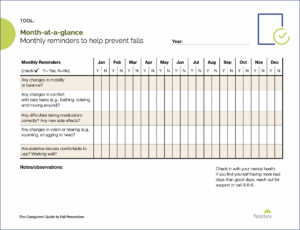
The monthly calendar provides reminders to support fall prevention and everyday safety. It prompts you to take note of any changes in mobility or balance, comfort with daily tasks, changes in vision or hearing and more. As a caregiver, you can use this tool on behalf of the person you care for or complete it together.
299.68 KB PDF/UA
-
Year-at-a-glance: Annual reminders to help prevent falls
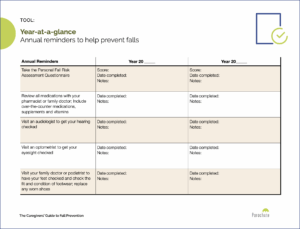
This annual calendar provides reminders to support fall prevention and everyday safety. It prompts you to check in with certain healthcare providers and reassess your fall risk through the Personal Fall Risk Assessment Questionnaire. As a caregiver, you can use this tool on behalf of the person you care for or complete it together.
174.57 KB PDF/UA
-
How to help if a fall happens (for the caregiver)
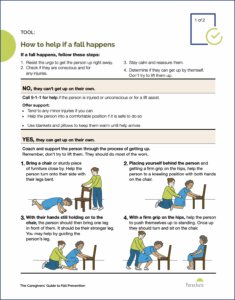
If the person you care for falls, it’s important to know how to help safely. For your safety and the person who has fallen, you should not try to lift them up. Find step-by-step guidance on what to do in this tool.
501.03 KB PDF/UA
-
Fall Action Plan: What to do if I fall when I’m alone (for the care recipient)
The Fall Action Plan is designed for the person you care for so that they can feel secure and confident in what to do if they fall while alone. It includes step-by-step guidance on how to get up from a fall independently if able, tips for staying safe at home and a place for organizing your emergency and healthcare contacts. You can review and complete the Fall Action Plan with the person you care for and share it with any relevant members of your care team.
515.15 KB PDF/UA
-
Documenting a fall
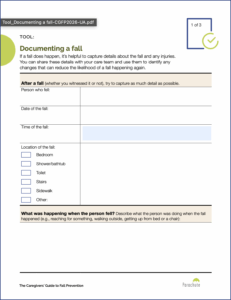
If a fall occurs, complete the Documenting a fall tool to capture details about the fall and any injuries. You can use this information when having conversations with your care team and to identify any changes that can be made to reduce the likelihood of a fall happening again.
219.65 KB PDF/UA
Caregiving organizations
-
Canadian Centre for Caregiving Excellence
The Canadian Centre for Caregiving Excellence supports and empowers caregivers and care providers, advances the knowledge and capacity of the caregiving field, and advocates for effective and visionary social policy, with a disability-informed approach.
-
Caregiving Matters
Caregiving Matters is an internet-based charity providing education and support to family caregivers.
-
Carers Canada
Carers Canada is a priority initiative of the Canadian Home Care Association, a national non-profit membership group dedicated to advancing excellence in home and community care so Canadians can choose to live safely and independently in their communities. Through federal advocacy and national awareness campaigns, the goal of Carers Canada is to increase recognition and support for caregivers. Carers Canada’s vision is to “create a Canada that recognizes, respects and values the integral role of carers in society.” A founding member of the International Alliance of Carer Organizations, Carers Canada is part of a global initiative championing caregivers’ rights.
-
Caregivers Nova Scotia
Caregivers Nova Scotia is a non-profit organization providing free programs and services, support and advocacy to unpaid family and friend caregivers in Nova Scotia.
-
Caregivers New Brunswick
Caregivers New Brunswick provides support to New Brunswick’s caregivers, collaborates with community and government agencies and promotes policies that ease the financial and mental health challenges faced by caregivers.
-
L’Appui – English
L’Appui works to preserve the health, well-being and quality of life of caregivers by helping caregivers connect to resources available across Quebec. They provide caregivers with a resource directory, training and a helpline for support.
-
Ontario Caregiver Organization
Ontario Caregiver Organization (OCO) exists to improve the lives of Ontario’s estimated 4 million caregivers. OCO provides access to information, services and supports that empower and help caregivers be successful in their role.
-
Caregivers Alberta
Caregivers Alberta provides resources, support and education to help people provide care to family members or friends. Services are wide-ranging to match the needs of caregivers: from a caregiver support line to one-on-one coaching and peer support groups to an award-winning caregiver education program, COMPASS for the Caregiver.
-
Family Caregivers of British Columbia
Family Caregivers of BC (FCBC) proudly and compassionately supports more than one million people in British Columbia who provide physical and/or emotional care to a family member, partner, friend or neighbour. FCBC supports caregivers by providing access to information, education,and supports that enable caregivers to feel more confident and successful in their role.
Fall prevention – General
-
Concussion Guide for Adults 65+ (2025)
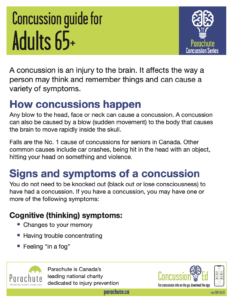
Adults 65+ may have unique considerations for concussion recognition and management. This resource provides information for adults 65+ on what to do if you might have a concussion as well as tips for managing and recovering from concussion and getting back to regular activities.
341.42 KB PDF/UA
-
How can I prevent a fall? – Finding Balance Alberta
Discover valuable information and practical strategies to help prevent falls with Finding Balance Alberta’s comprehensive resource.
-
Move, Improve, Remove Posters
These posters promote healthy aging and fall prevention. They are aimed at older adults and designed to be posted in a variety of settings (e.g., hospitals, clinic waiting rooms, pharmacies, community buildings, long-term care and retirement facilities etc.).
-
Preventing Falls: A Guide for People Living With Parkinson’s
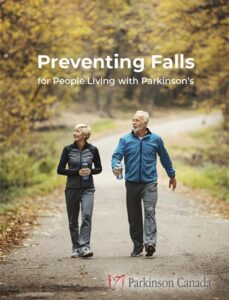
This booklet may be helpful for people with Parkinson’s, family members, friends, or care partners. It will help identify some of the causes of falls and suggest simple and practical suggestions to keep people with Parkinson’s active, independent, and on their feet.
-
You CAN prevent falls – Public Health Agency of Canada
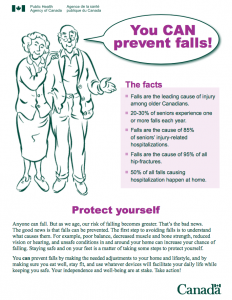
You can prevent falls by making the needed adjustments to your home and lifestyle, and by making sure you eat well, stay fit and use whatever devices will facilitate your daily life while keeping you safe.
Medication management
Mobility, exercise and balance
-
Adding movement to your at-home routine
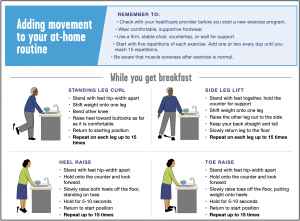
This resource provides how-to instructions on movements that will improve strength and balance, important factors in preventing falls in older adults.
421.65 KB PDF/UA
-
Balance exercises for people living with Parkinson’s disease – Tip Sheet
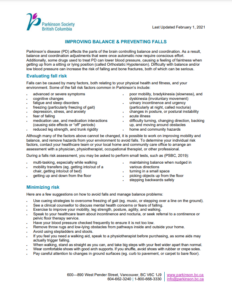
Parkinson Society BC has developed a tip sheet that includes information on evaluating and minimizing fall risk, recovering from falls, how to improve balance and more!
462.85 KB PDF
-
Balance exercises for people living with Parkinson’s disease – Video Series
This video series includes several low-impact balance exercise classes with Parkinson Society BC’s neuro physiotherapist, Shelly Yu. These classes focus on lower extremity strength and agility-type activities required for fall prevention, such as multidirectional stepping, weight shifting, and turning.
-
Canadian 24-Hour Movement Guidelines for Adults ages 65 years and older: An Integration of Physical Activity, Sedentary Behaviour, and Sleep
This guideline offers clear direction on what a healthy 24 hours looks like for Canadian adults aged 65 years and older.
-
Find an occupational therapist – Canadian Association of Occupational Therapists
A platform to help Canadians access the occupational therapy services they need.
-
Occupational therapy and fall prevention
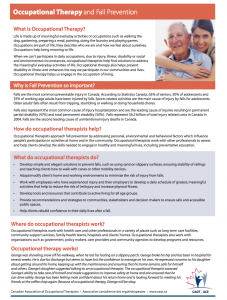
This fact sheet explains the basics of occupational therapy and why fall prevention is important. Provided by the Canadian Association of Occupational Therapists.
-
Physical Activity Tips for Older Adults (65 years and older) – Government of Canada
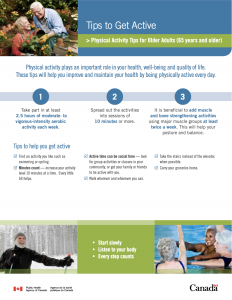
This resource discusses the health benefits of being active and provides you with physical activity tips to help you include more activity in your day.
-
Strength and Balance for Life (STABL)
Strength and Balance for Life (STABL) is a set of activity resources that support the wellbeing and independence of older adults by reducing the risk of falling. They include strength and balance activities with videos and instructions, goal setting information and a tracking sheet to record progress.
Vision and eye health
-
Find an optometrist
Use this search tool to find an Optometrist in your area.
-
Preventing vision-related falls in seniors
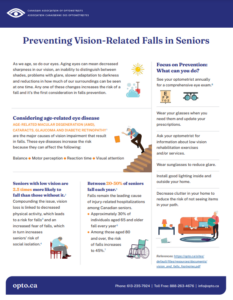
The Canadian Association of Optometrists produced a one-pager that describes how changes in an individual’s vision can increase the risk of a fall and outlines a number of strategies to prevent vision-related falls in older adults.
-
Vision (BC)
This webpage from the Government of British Columbia offers questions to ask yourself and suggested actions to take to assess and reduce your risk of vision-related falling risks.
Hearing health
Home modifications, equipment and devices
-
Funding information for home modifications, equipment and devices
This resource provides details about home modifications, equipment and device funding at the national, provincial and territorial level. The information is current as of December 2025.
144.68 KB Word
-
Maintaining Seniors’ Independence Through Home Adaptations: A Self-Assessment Guide (2009)
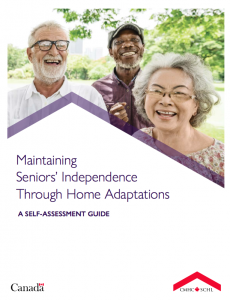
Designed for seniors, this large-print Guide identifies the types of difficulties seniors can experience in the home and describes adaptations to overcome these difficulties. This Guide helps seniors assess their own unique circumstances including using stairs, moving around the house, doing laundry and answering the door.
Developed by the Canadian Mortgage and Housing Corporation. -
Occupational therapists on home modification teams
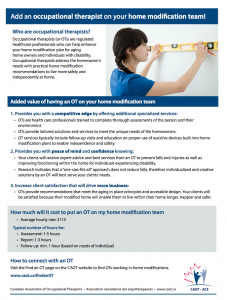
This fact sheet explains the added value of having an occupational therapist on your home modification team. Provided by the Canadian Association of Occupational Therapists.
-
The Safe Living Guide – A Guide to Home Safety for Seniors
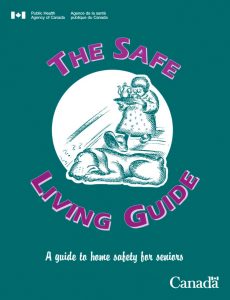
Through this guide, the Public Health Agency of Canada provides advice on how to prevent injuries by keeping your home, yourself and your environment as safe as you can. Checklists allow you to verify and increase the safety of your surroundings and lifestyle, and real-life stories offer testimony to the value of adapting.
-
Safer Bathrooms, Safer Bathing
Navigating a slippery bathtub or shower can be challenging, but grab bars can help you move safely and confidently in your bathroom. In this infographic from the KITE Research Institute at University Health Network, find out what features to look for in a grab bar, and where to install it. Check out the links at the bottom of the infographic for resources, and where to turn if you need more help.
-
Spot the hazard: Home safety checklist
This booklet from Finding Balance Alberta helps you spot hazards in your home that may increase the risk of falling. The booklet includes an Action Plan Log to help you make plans for removing hazards and delegate tasks.
-
Staying safe at home – Webinar
In this short webinar from Caregiving Matters, learn tips and strategies to improve the safety of your home.
-
12 Steps to stair safety at home – Public Health Agency of Canada
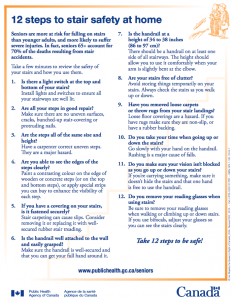
Take a few minutes to review the safety of your stairs and how you use them.
Blood pressure management
Staying hydrated and healthy eating
Footwear
-
Better Winter Footwear Handout
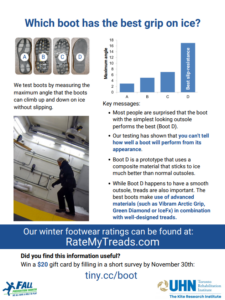
A new generation of winter footwear can significantly reduce the risk of slipping and falling on icy surfaces. This infographic produced by the KITE Research Institute at University Health Network highlights the importance of using KITE’s lab-based testing to determine footwear effectiveness on ice because looks can be deceiving.
-
CARP Ottawa: Winter footwear and staying active in winter
Session 1 of 3 from the C.A.R.P. Ottawa Chapter’s fall prevention webinar series in November 2020.
Leigh Vanderloo (Knowledge Translation Manager, ParticipACTION) describes the importance of maintaining physical activity during winter months and movement guidelines.
Tilak Dutta (Scientist, KITE Research Institute, University Health Network) describes how his lab tests gripability of winter boots and how they rate winter boots that provide better friction on ice.
Judy Andrew-Piel (Community Support Coordinator, Bushtukah) explains traction basics with practical tips regarding safer outdoor winter footwear.
-
Find a podiatrist
A podiatrist can diagnose and treat conditions of the foot, ankle and lower leg and can provide general foot care and rehabilitation. Use this directory to find a podiatrist in your region.
-
Rate my Treads
Rate my Treads is a website that provides ratings for various types of winter footwear for their slip resistance in different winter conditions.
Rate my Treads is a product of iDAPT, the research arm of the Toronto Rehabilitation Institute – University Health Network located in Toronto. iDAPT works with a broad range of clinicians, engineers, scientists, researchers, students and more to find practical solutions to common problems.
Mental and emotional health
What to do after a fall
-
Helping someone get up – Alberta Health Services
Guiding someone to get up after they’ve had a fall prevents you and them from being injured.
-
How to Get Up From a Fall Instruction Video – Finding Balance Alberta
Description: This 30-second video explains what to do if you fall and how to get up safely by yourself if you are not hurt.
-
If I fall, what do I do? – Finding Balance Alberta
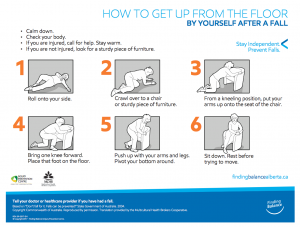
Visual, step-by-step instructions describe how to get up from the floor by yourself after a fall. Available in 14 languages.
-
If you fall or witness a fall, do you know what to do? – Public Health Agency of Canada
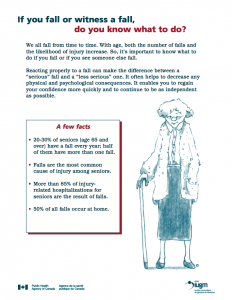
Discover essential knowledge and practical steps to prevent falls and respond effectively with the Fall Prevention and Response resource provided by the Public Health Agency of Canada. From prevention strategies to immediate response guidelines, empower yourself to promote safety and well-being in your community.
Services and support
Media
-
Link
How caregivers can prevent everyday injuries, with Pamela Fuselli
Time to Talk podcast — March 4, 2026