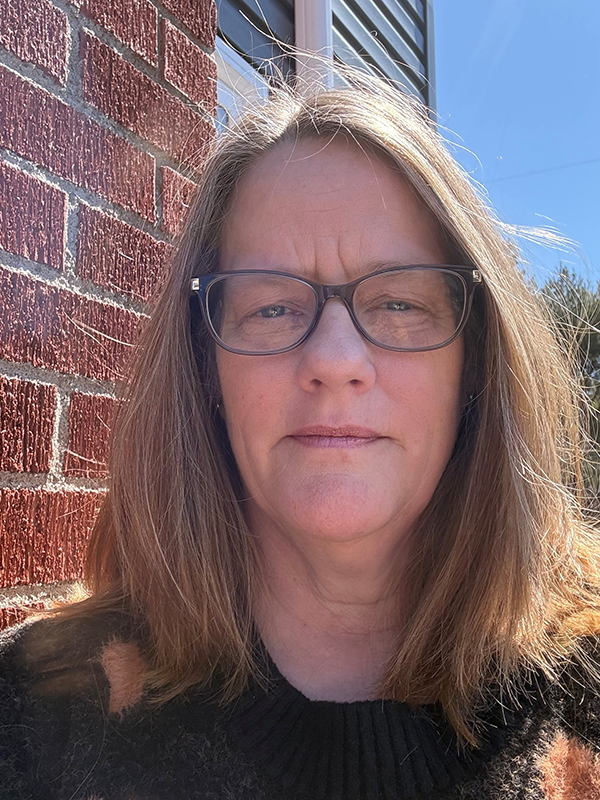
Sandra Newton is the Manager of Child Safety Link, located at IWK Health in Halifax, NS.
How did you find you way into the injury prevention field? What attracted you?
My first degree was a Bachelor of Science and Nutrition and Biology. I really liked it but didn’t think it was for me. I considered an MBA, so to see if I preferred it, I took a certificate in business administration and really enjoyed it. Then I found the health promotion degree at Dalhousie University, and I knew I’d found my field.
After Dalhousie, I completed a Master of Science in Health Promotion at Purdue University in Indiana. At first, I had considered a master’s in public health but at that time, I was told that you needed to be a doctor to be eligible. Injury prevention was never covered in health promotion, so I sort of fell into the field. I was always attracted to the roles that were less developed and had less attention because I really liked a challenge. That kept leading me to injury prevention roles.
When I finished my Master’s, I worked for the Ontario Ministry of Health (Health Promotion Branch) and there I developed a program called ACTION – Alcohol, Cannabis and Tobacco Health Promotion Project for Youth. There was a bit of injury prevention included.
At that time, each health unit in the province had program called FOCUS with the intent to focus on alcohol prevention. I moved to Kingston, Ontario and worked at the KFL&A Health unit as the FOCUS co-ordinator, and our main focus was on injury prevention specifically impaired driving. I started the Greater Kingston Area Safe and Sober Community Alliance and implemented the first mobile intoxilyzer unit in the country. I’m from the east coast, so when a job came up at the Izaak Walton Killam (IWK) Health Centre, I thought I should apply. I almost didn’t because there was an injury prevention job in Kingston that looked interesting but, in the end, I wasn’t eligible to apply because I wasn’t a nurse. At IWK Health I became the Director of the Nova Scotia Child Safety and Injury Prevention Program (the title soon changed to Manager). I took that position in 2002. The program was very different then, more research-focused, but they wanted me to develop a health promotion program.
I also had a personal traumatic experience with someone who died because of an injury, and I always think about what would have happened if they hadn’t died. I don’t know if that led me to injury prevention or just made me more aware.
How long have you been working in the injury prevention field?
Thirty years.
What have been the biggest changes you’ve seen since you started?
I think the evolution of the increase in the focus on the social determinants of injury. We didn’t talk about that years ago even though while I think everyone kind of understood it, it wasn’t addressed specifically. Also, moving away from being individually focused to more population health focused has been a big change. For Child Safety Link, the increased focus on newcomers is not something we addressed in the first 20 years, but there has been such diversity in the change in the population, we felt it was important to learn more and support these families.
Government priorities have ebbed and flowed over the past decade. Ten or 15 years ago support for injury prevention was really strong, and we did have good leadership in different areas of the province. I would say that has changed. Governments change. There’s always pockets of great support but there is always the need to justify our existence.
There is more understanding about the preventability of some injuries, but still confusion about what injury prevention is.
Why did you stay in the injury prevention field?
I’ve always been attracted to the underdog, and, with injury prevention, there are so many opportunities to work and grow. But it’s challenging. There are also a lot of people across the country that I love to work with, and I admire what they do so it keeps me motivated
One of the strengths of the field is that people come from different perspectives, different training, because there is no injury prevention degree. There’s a lot of collaboration and that’s important.
In the job, there is a wide range of focus and responsibilities, from finance and administration to injury prevention programming. People often say, “oh, you’re still there,” and I say, yes, because it’s always changing. There’s always some kind of new challenge. And as the manager, I have a lot of freedom to decide what we should be doing.
What is one standout success/memory?
When I was in Kingston, working as part of the impaired driving alliance, it was a great group of people who really wanted to be involved and to do the work. We created the Enhanced R.I.D.E program and created the first mobile intoxilyzer unit in the country to help prevent or reduce impaired driving. We had this big, donated truck where we set up the unit – sort of like a mobile police station. We had lots of support, and the unit was shared between the city police, RCMP and military police! The program had great measurable results. We saw a significant decrease in impaired driving crashes and injuries coming into the emergency department and there was anecdotally a decrease in crime because of the visibility of the program.
At Child Safety Link, we did quite a bit of work around different provincial regulations/policies that got passed over the years. Being part of the Nova Scotia injury prevention strategy was big. Having more strict helmet legislation, ATV legislation, booster seat legislation – we did quite a few policy changes in a couple of years. That doesn’t usually happen.
From when I started at Child Safety Link, I’ve had the privilege to lead the growth and change from a Nova Scota-focused, home safety and research program to a Maritime/Atlantic-wide program that is evidence-based and a respected leader.
How do you feel about the future of the injury prevention field?
There are many of us who have been around for a long time who are or will be retiring. It’s a small field so those people will leave big gaps. For example, with the Canadian Collaborating Centres for Injury Prevention, I used to know everyone and now I don’t know too many. I reach out to the ones I do know but the relationships that we had in the past are changing. It’s a good thing new people are getting involved, but we need a way to build the closer connections. Injury prevention continues to be at the side of most people’s desks; there aren’t many people in the field who have injury as their full-time job. There are limitations too within organizations where new people join but they don’t have space to move up in their careers. Trying to develop a sustainability or succession plan is challenging because if you identify a person who would be good to replace a higher-level position, they may not be at the organization for long enough. Sometimes it works I created a junior Health Promotion position and when a Health Promoter moved on, I was able to promote the Junior HP to the role. It was perfect because they’d already been at Child Safety Link for more than a year and was ready to take on more responsibility.
I’ve often thought we should write a book about the history of injury prevention to keep the knowledge and pass it along to the next generation of leaders. Maybe it doesn’t matter what happened 20 years ago, but maybe it will. I know the documents I’ve created over the years have been helpful for me and, when someone starts in my role, those documents will provide context and how we evolved.
If you could wave a magic wand and change one thing for injury prevention, what would it be?
We would have adequate funding and not have to justify our work constantly. That would be tremendous because so much of our time goes into justifying why we exist. I’d also want the community and funders to understand that injuries are preventable and part of good health. Even with the cost of injury data, it doesn’t mean enough to people. We need to show the financial return on investment, but the challenge is we don’t have the capacity – I’m not a health economist – and the experts and researchers are in a different field so if we don’t know about them, we can’t reach out and engage them.
It would be ideal if governments used a public health lens and use the evidence we have to made decisions. For example, we know access to alcohol increases impaired driving, violence, et cetera, but the government is moving to make alcohol available in corner stores or in vending machines. The evidence is clear on how bad an idea this is for public health. And we need a car seat that just works for everybody and is easy to install!