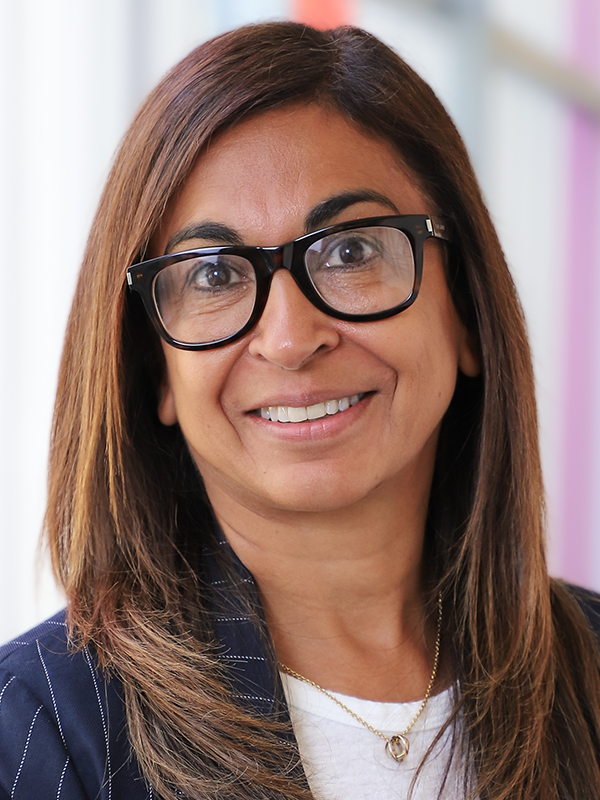
Shelina Babul is the Director of the BC Injury Research & Prevention Unit and Clinical Professor in the Department of Pediatrics, UBC. Her area of focus includes: 1) Identifying and addressing critical gaps in injury prevention; 2) TBI/Concussion-specific research and related strategies to promote uptake of proven and effective interventions; and 3) Coordination of TBI/concussion efforts locally, provincially and nationally.
How did you first find your way into injury prevention?
Honestly, it happened completely by accident! I applied for a position at the BC Children’s Hospital in 1998 asI was looking for a part-time job while completing my my Masters degree. It wasn’t necessarily because of interest in injury prevention. At the time, Dr. Parminder Raina was starting the BC Injury Research & Prevention Unit, but I had actually applied for a different position with another team on the same floor, that focused on measuring C.elegan worm movement to assess pain. There was a lot of interaction between the teams and I quickly realized (as did my supervisor) that the worm job was not for me. So, I asked Parminder if there were any job opportunities with him team and fortunately there were. I started working at BCIRPU when those doors first opened and I’ve been working here ever since. I worked while completing my Master’s followed by my PhD as a research assistant. From there, I progressed to becoming the sports injury specialist, serving as acting director for a short period, the associate director for many years and now the director of the BCIRPU.
What kept you at BCIRPU once you made that switch?
A combination of timing and opportunity. I was doing my master’s at the time, which then rolled into my PhD, and the work at BCIRPU aligned and evolved right along with my growing interests. The unit kept creating roles that fit my skills – research assistant, sports injury specialist, acting and associate director, to director. I loved the work and didn’t want to leave.
What was injury prevention like back when you started?
No one knew what it was! When I told people I worked in injury prevention, they looked confused and asked what does that even entail. Today there’s more recognition, dedicated resources, and it is a provincial priority thanks to leaders such as Dr. Shaun Peck, who was the Deputy Provincial Health Officer from 1996 to 2004. (But we’re still not where we need to be..).
Has the partnership model in B.C. helped strengthen the field?
Absolutely. BCIRPU is a partnership between the University of British Columbia, BC Children’s Hospital, the Ministry of Health, The Provincial Health Services Authority and BC Centers for Disease Control, and the regional health authorities. That partnership gives the BCIRPU alignment to provincial priorities,access to resources such as data, credibility, and allows us to leverage external grants and contracts. I’m not aware of any other province that has a smiliar model.
What’s kept you in the field for 26 years?
The variety of topics and priorities affecting public health. I get to blend areas of research, teaching, administration, my concussion program including the development such as the Concussion Awareness Training Tool (CATT). There’s always something new in public health and injury prevention, but I’ve also had the freedom to explore areas I’m passionate about.
Do any moments stand out as milestones in your career?
Definitely two moments stand out. First, booster seat legislation in B.C. – that was a big priorty which led to policy change. The other is the two helmet legislation challenge cases where I was asked to testify, representing the Ministry of Health. Both cases challenged the $75 fine that the individuals were given for not wearing a helmet. It took hours and hours of preparation, especially for the second case, reading all the documents and witness and defendant affidavits, prepare my own affidavits, taking notes and combing through the literature. I even missed a family vacation to prepare for the court case. I was called to the stand from 9 a.m. to 4 p.m. with an hour break for lunch. Thankfully we won the challenge, and it remains one of my proudest professional moments.. I still have all the boxes full of documents from those cases in my office and they’re not going anywhere!
Have you ever faced pushback from BCIRPU being housed at BC Children’s Hospital (BCCH)?
Oh yes. Every time there’s new leadership in finance, we have to explain why the injury unit exists at the BC Children’s Hospital. They say, “Why is the BCIRPU at BCCH given the work addresses all ages?” We’re currently working on some standard languagea in the form of a letter so that we don’t have to have the same conversation every time.
How do you feel about where the field is heading?
I’m a little worried to be honest, because many colleagues are retiring and the champions we’ve had in the field to date are getting limited. Who is going to fill those shoes? How is the landscape of the field going to change? What happens to injury prevention, to the whole system that’s been built over the past 25 years? I’m worried about the sustainability of injury prevention in B.C. and across and we need new leaders for a sustainability and transition plan. Funding to fill positions is also limited in order to create opportunities for people to work in the field.
It boggles my mind, at the national level and looking at the cost of injury, how the field isn’t getting more attention and more dedicated resources to prevent injuries and save lives. It really doesn’t make any sense. We really need two things working together – a business case for injuyr prevention and political will.
What’s keeping you personally up at night about the future?
The limited number of people readyto take over leadership roles in injury prevention. I worry what happens to BCIRPU and to injury prevention in Canada when the many of us retire.
If you could wave a magic wand and change one thing, what would it be?
Funding, without a doubt! With real, dedicated federal investment, injury prevention could truly scale, innovate and finally get the visibility and recognition it deserves. Funding would let us build capacity, run national awareness campaigns, support strategic planning to reduce the burden and cost of injury, and train and expand prevention programs It would allow for more collaboration and build stronger parnterships and awareness around injury prevention as a critical public health issue. Honestly, if I won the lottery, that’s what I would do – donate to charity and invest in injury prevention initiatives that could make a real difference in the lives of people.