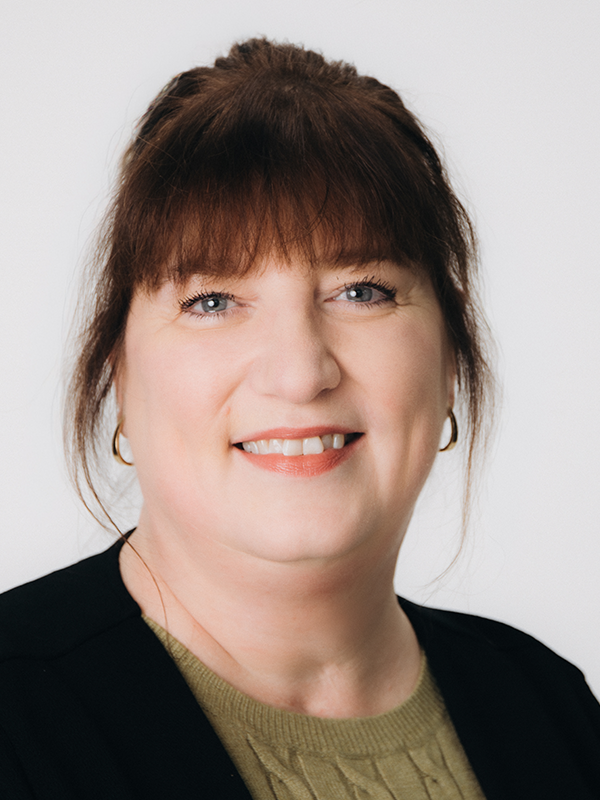
Pamela is the President & CEO at Parachute, and she has focused on turning research into action. Through her work to raise awareness and advocate for change, she has become a recognized expert in areas of injury prevention such as transportation safety, fall prevention, poison prevention, concussion and home safety for children.
How did you find you way into the injury prevention field? What attracted you?
There are no straightforward paths to working in injury prevention. I did a degree in Psychology that has certainly been useful on the behavioural side of prevention. I started as a Research Assistant in the Psychology department at SickKids and the Toronto General. I completed a second degree in Health Administration and moved on to support professional services areas at SickKids such as the emergency department (including the Canadian Hospitals Injury Reporting & Prevention Program – CHIRPP), psychology, psychiatry, pharmacy, the Ontario Poison Centre, and the Centre for Health Information Program (CHIP). Through CHIP’s director who also led Safe Kids Canada (SKC), I connected with that organization which was a national non-profit dedicated to preventing injuries to children, supported by SickKids. I joined SKC in 1999 and made my way through positions to Executive Director in 2008, earning a Master’s in Creativity & Change Management at the same time. Around 2010, along with three other leaders and co-founders, we undertook a process that resulted in the formation of Parachute in 2012. I moved to Parachute as a Vice President and then took on the President & CEO role in 2018.
Initially, I was attracted to the field because it made sense. It made sense to prevent rather than treat. It made sense that we knew the cause and effect, with evidence to show the effectiveness of prevention. It incensed me that children were dying and being seriously injured when we knew how to avoid the heartbreak these families experienced. And there was the challenge of changing policy, infrastructure, products and the environment as well as behaviour to achieve fewer lives lost.
What have been the biggest changes you’ve seen since you started?
Starting at the macro-level, there have been changes to the field’s credibility through an adherence to the evidence. We base the work on what the data tell us, the solutions that have been proven to work, and a framework (Haddon’s Matrix) to guide our approach. These changes have been led by a group of dedicated professionals who have worked incredibly collaboratively over the decades to build the field’s knowledge and support each other to continue, connect with other fields and sectors to join forces, and to advocate for funding to enable change.
Unfortunately, a big change has been the decline of funding for the sector and the issue of injury prevention. I had access to more funding from the corporate sector, including funding for the core business of SKC, than I have today. What hasn’t changed is the lack of funding commensurate with the burden. Preventable injuries are the No. 1 cause of death to people in Canada aged 1 to 44 and the third-leading cause for all ages. This is a public health reality that has not changed in more than 25 years, even though we know how to prevent these deaths – we have the solutions. On top of that, the costs to the Canadian health care system continue to rise. It is now more than $30 billion annually. Every single year our taxes go to care for people in our emergency rooms, hospitals, rehabilitation centres and long-term care facilities who do not need to be there.
Why did you stay in the injury prevention field?
What drives me is this fact. People are needlessly dying and the solutions are known. The powers that be who make the decisions are choosing not to implement what we know will avoid the fatal and serious injuries. My guess is that the worst thing that could happen to a person is having a loved one die. The next worst is for that person to be changed forever. When I speak with families who have experienced an injury, there is a line in time that distinguishes the before and the after; and there is no way to turn back the clock. There is only proactive, upstream prevention that can avoid that outcome.
The passion and dedication of those who work in this field are another reason I’ve stayed. I’ve had the privilege of working with and learning from amazing, kind, super smart people who want to stop injuries from happening, while enabling people to live their lives to the fullest.
There have been times when it’s seemed too difficult, the hurdles too high, or that change would never be realized.
What is one standout success/memory?
There have been few successes that stand out over the years. In 2024, baby walkers with wheels were banned in Canada and we are still the only country in the world with this ban. Safe Kids Canada, along with partners from across the country such as emergency department physicians, leading public health and injury prevention experts, advocated to the Government of Canada to ban this product based on the number of severe injuries and deaths to children from falling down stairs or pulling kitchen appliances and/or hot liquids onto themselves. In addition, paediatricians confirmed that these walkers did not help children to walk; in fact, in some cases, it delayed walking. The walkers gave children the ability to move around to places they couldn’t otherwise access. Even with a strong industry appeal, the ban remained in place. Baby walkers with wheels disappeared from street corners, from retailers and second-hand stores. While walkers do still make it into Canada through international shipping, the injuries have been reduced significantly.
While these two successes aren’t the same, the underlying change is – the public’s understanding and support for prevention. When Vision Zero was first introduced in Toronto in 2016, I was pleasantly surprised that the public backlash to the plan was that it didn’t go far enough and not enough funding had been allocated toward the initiative. Toronto subsequently increased the funding and expanded the initiative. A similar reaction was seen in the area of concussion, especially in sport. For decades, experts had been calling attention to the serious nature of concussion, that it wasn’t simply “getting your bell rung” and that you had to “play through it”. The tipping point came when Sydney Crosby suffered a concussion and took time off to ensure a full and healthy recovery. This led the way to a shift in public perspective and knowledge about concussion. Parachute published the first Canadian Guideline on Concussion in Sport in 2017 and we welcomed the readiness of sports organizations who were open to and looking for guidance on concussion.
How do you feel about the future of the injury prevention field?
To be completely honest, I feel both optimistic and pessimistic for the future.
Pessimistic because we haven’t been able to move the needle to achieve priority for injury prevention in public health and with key government decision-makers. Preventative approaches usually get pushed down on the priority list by acute care that needs immediate attention. The irony is the fact that if preventative approaches were prioritized, there would be fewer acute care needs.
Optimistic because the small but mighty army of injury prevention champions don’t give up and the evidence is on our side.
There continue to be new academic graduates working with the current leaders in injury prevention; however, people who want to take on leadership of organizations like Parachute are fewer.
Our work is far from being done. With new products such as e-scooters, our work continues to evolve and connect with other fields on shared issues cross sectors, including the environment, active living, mental health, urban design, and more.
If you could wave a magic wand and change one thing for injury prevention, what would it be?
If I could change one thing, it would be that preventable injuries outside of workplace injuries are prioritized by public health, federal, provincial and territorial governments. This prioritization would result in resources, human and financial, being allocated that, in turn, would trigger accountability and measurement. It can be done. We’ve seen it happen in the workplace safety space. When governments prioritized workplace safety, funneled financial support to action, identified responsible and accountable individuals, and required reporting, the injuries on the worksite plummeted. All other injuries? They continued or increased. So, my magic wand would change and save lives and make it unconscionable to make decisions that do not prevent fatal and serious injuries. It’s a choice.