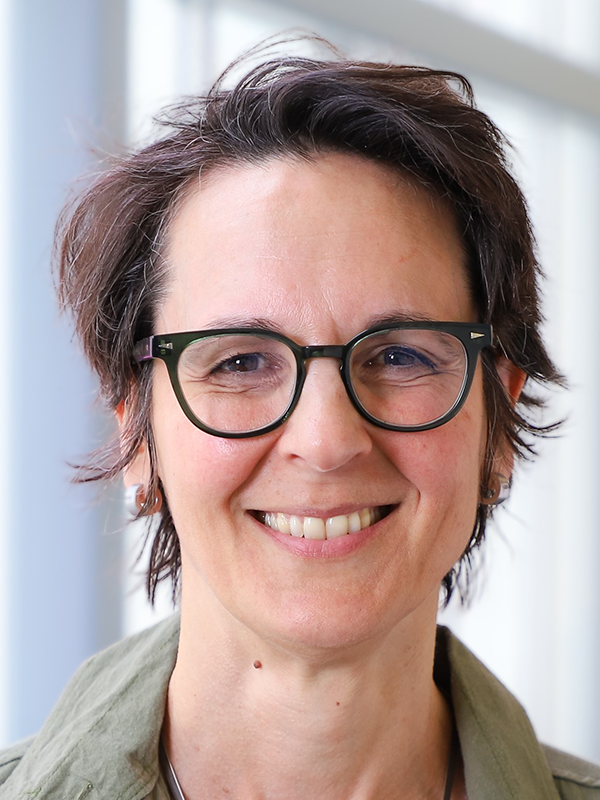
Mariana Brussoni is a professor in the Faculty of Medicine at the University of British Columbia and the Director of the Human Early Learning Partnership, as well as lead of the Outside Play Lab at BC Children’s Hospital.
Hwo did you end up in the injury prevention field in the first place?
Honestly, there was nothing noble about it. I was doing my PhD and felt challenged by academia at the time – the endless trips to the library, photocopying articles, writing papers that maybe five people would ever read. Knowledge mobilization wasn’t really a thing then. After graduating, I took a job at a government agency. It was so bureaucratic and painfully slow that within three months I was desperate to leave. A friend sent me the British Columbia Injury Research and Prevention Unit (BCIRPU) associate director posting, and I applied basically to escape. That’s how it all started.
What were those early years like and what took you to England?
At BCIRPU, I was associate director under Dr. Parminder Raina. After a few years, my husband and I moved to England. We had always wanted to live abroad at some point and he had a British passport, so that made things a bit easier. I was open to doing anythinging while there, not necessarily injury prevention or even research. But of course, your CV funnels you in certain directions. Through connections, I ended up working with Elizabeth Towner (a professor of child health at the University of the West of England). So even though I hadn’t planned on staying in injury prevention, I kept getting pulled back to it. At the time, she was leading a national evaluation of a home fire safety initiative and I was her research coordinator. It was great because I got to work intimately with the top injury prevention researchers in the UK, as well as visit communities across the UK to learn about their prevention efforts. It had a big Inflluence on my work when I returned to Canada and set up my own lab.
And how did you end up back in Vancouver in a faculty role?
That was pure serendipity. Our department chair in the Department of Pediatrics at UBC, Bob Armstrong, happened to be travelling in England and visited us. He told me BCIRPU still hadn’t filled the faculty position we had split off years earlier and said I should apply. Next thing I knew, they offered me the job. I had my daughter Anna in 2006 and settled family things, and then I came back.
When did the work start to feel meaningful or exciting for you?
Not right away. As associate director, I had a lot of admin. When I became faculty, I had to build my own research program. I knew I cared about children and parenting, so I started there. The real spark came from interviewing fathers about safety and realizing I didn’t live my life according to the strict risk-averse model we preached, nor did it fit with what I knew about developmental psychology. What fathers were saying resonated with me. Then Ellen Sandseter’s work on risky play came out, and everything clicked. That’s when I felt like, “This is my space.”
Looking back to when you first started, what are the biggest changes you’ve seen in the field?
When I started in 2001, the field was almost entirely epidemiology-driven: statistics, surveillance, very rigid thinking. Now it’s much more interdisciplinary. There’s also more work happening in low- and middle-income countries, or at least more visibility around it. And the biggest shift for me has been the whole conversation around risky play and risk versus hazard. That’s been transformative.
Has teaching changed over the years?
Oh, completely, in both good and not so good ways. We’ve been struggling more with some students not being as prepared to use their independence and critical thinking skills, and wanting more guidance. They look for “the right answer” instead of forming and defending their own ideas. We’ve cut down the reading lists and assignments because many seem less prepared to complete the workload. We’re also now trying to figure out how to integrate AI because it’s not going away, but that’s still evolving. On the positive side, topics such as social determinants, suicide, self-harm, and Indigenous health are much more developd and embedded in the curriculum.
You’ve trained a lot of students. What does that pipeline look like now?
The CIHR Strategic Teams in Applied Injury Research (STAIR) grant was incredible – it brought in so many trainees and really elevated the whole field. But once that funding ended, everything tightened. Many of my students are mature students with families, mortgage: they can’t just pick up and move for a postdoc or faculty position. And academic jobs are extremely scarce. Health authorities are making budget cuts. Even my own lab has students finishing up with no clear place to go.
What happens to injury research programs when people like you retire?
They disappear. Universities aren’t replacing specialty roles. When someone retires, the position either isn’t reposted or is posted broadly – “public health” – and applicants come with unrelated research areas. If anything, someone with a totally different focus has a better shot because the university thinks, “We already have someone doing injury.” So when I retire, my research program will probably end.
So why stay in the field? What’s kept you here?
I truly love the work. I have endless ideas and still see major gaps that need addressing. Funding is the hardest part now –grants are always difficult to get and getting harder as funding diminishes – but the passion is still there.
What moments stand out as major accomplishments?
The 2015 Position Statement on Active Outdoor Play is a big one. It exploded, in a good way. It paved the way for statements on outdoor and risky play from the Council of Chief Medical Officers of Health, the Canadian Public Health Association, the Canadian Paediatric Society, and even influenced broader conversations, like the recent bestseeling phenomenon of The Anxious Generation by Jonathan Haidt. Seeing those ripples has been incredibly rewarding.
We often talk about injury prevention’s “PR problem.” What’s your take?
Nothing has changed. We still lack recognition even though injury is the leading cause of death for people under 45. Preventable (a public awareness campaign based in B.C.) has done some work, but overall the healthcare crisis sucks oxygen from everything else. Politically, the focus is on acute care, not preventing harms before they happen. It’s frustrating because the need is so obvious to us.
Do you ever worry about backlash in the risky play conversation?
All the time. I’m always waiting for someone to completely misinterpret the concept and do something irresponsible, which could taint everything and swing the pendulum back toward overprotection. That’s my biggest fear.
Despite the challenges, what gives you hope?
When I look back, we have made huge strides: concussion work, helmet and booster seat laws, ATV policy progress, big policy wins by colleagues across the country. I remind myself that slow progress is still progress. I have about 12 or 13 years left in my career. I plan to do everything I can to move this field forward.
If you could wave a magic wand and change one thing for the future of injury prevention, what would it be?
That every teacher would teach outside. They’d be trained and feel confident in their ability to manage the risks and hazards, and see for themselves the benefits to their students and themselves in taking their classes outside. Outdoor learning would have massive benefits – not just for injury prevention but for physical and mental health, equity, creativity, everything. Schools are the most equitable access point for kids to be outdoors. If we could normalize outdoor education, we’d see transformations across multiple health and social domains.